
 SECURITY ALERT
Strategic Importance of the Global South
The Global South represents over 80% of the world’s population and nearly two-thirds of the global economy in terms of purchasing power parity (PPP). However, despite their numerical and economic strength, these countries have often faced marginalisation in global governance structures like the United Nations Security Council (UNSC), International Monetary Fund (IMF) and World Trade Organisation (WTO). For decades, the concerns of the Global South—such as fair trade, climate justice, equitable access to technology and development finance—have taken a backseat in global discussions dominated by the Global North.
India’s Role as a Leader: With a GDP of over $3 trillion, India has become the world’s fifth-largest economy. It has effectively leveraged this position to champion the interests of the Global South, advocating for more inclusive global governance mechanisms. For instance, India has repeatedly called for the reform of the UNSC to include more representation from developing nations. India’s assertiveness on this issue underscores its desire to ensure that the voices of the Global South are adequately heard in decision-making processes.
India’s Historical Legacy in Championing the Global South
India’s engagement with the Global South dates back to its independence in 1947. As a founding member of the Non-Aligned Movement (NAM) in 1961, India positioned itself against the bipolarity of the Cold War, advocating for a world order that respected the sovereignty and development needs of newly independent countries. This legacy has been carried forward in modern times, as India continues to emphasise strategic autonomy and partnership with other developing nations.
Bilateral and Multilateral Initiatives: India’s diplomatic outreach extends across continents through platforms such as the India-Africa Forum Summit, the Forum for India-Pacific Islands Cooperation (FIPIC) and the BRICS (Brazil, Russia, India, China, South Africa) grouping. These engagements have led to increased cooperation in areas like trade, technology transfer, capacity building and infrastructure development. For example, the India-Africa Forum Summit has facilitated trade between India and Africa, which reached approximately $90 billion in 2021-2022.
India’s G20 Presidency: Amplifying the Voice of the Global South
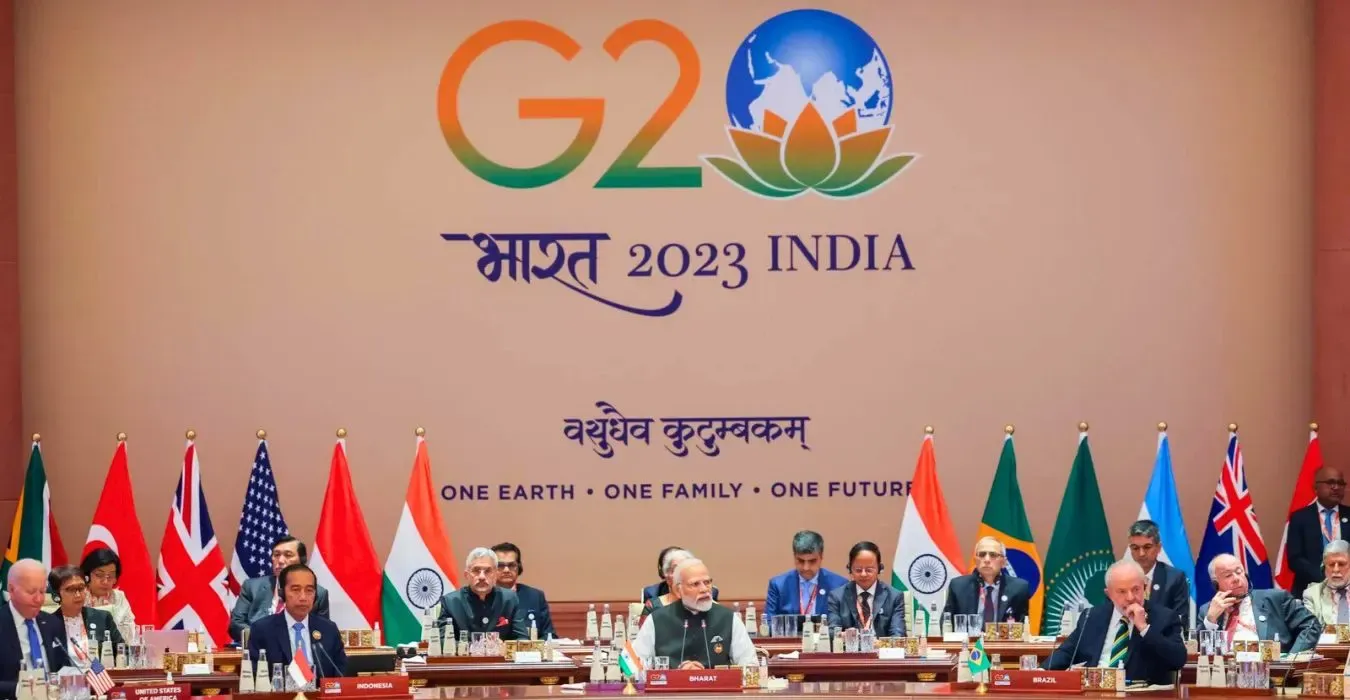
India’s G20 Presidency in 2023 marked a significant moment in its quest to represent the interests of developing countries. As the host of the G20 Summit, India centred its agenda on issues critical to the Global South, such as climate financing, sustainable development, digital inclusion and food security. The theme for the summit, “Vasudhaiva Kutumbakam” (The World is One Family), encapsulated India’s vision of global cooperation.
Key Outcomes for the Global South: During the G20 Summit, India advocated for the debt restructuring of low-income countries burdened by unsustainable debt levels, particularly in Africa and Latin America. This focus resulted in commitments to strengthen the Debt Service Suspension Initiative (DSSI). Additionally, India proposed the establishment of a global digital public infrastructure that could empower developing countries to bridge the digital divide, enabling more inclusive economic growth.
International Solar Alliance (ISA): India also used the platform to promote initiatives like the International Solar Alliance, which seeks to mobilise billions of dollars for solar energy projects in tropical countries, many of which belong to the Global South. This reflects India’s commitment to climate justice and helping vulnerable countries transition to cleaner energy sources without compromising their development needs.
Economic Cooperation and Development Assistance
India has significantly expanded its economic cooperation and development assistance programs, making it a preferred partner for many countries in the Global South. Through initiatives like Lines of Credit (LoC) and the Development Partnership Administration (DPA), India has provided over $30 billion in development assistance to countries across Africa, Asia and Latin America.
A Champion of Climate Justice
As the effects of climate change become more severe, the Global South faces disproportionate challenges despite contributing the least to global emissions. India’s leadership in advocating for climate justice is a critical aspect of its role as the voice of the Global South. At the COP26 in Glasgow, India emphasised the principle of “common but differentiated responsibilities,” urging developed countries to fulfil their commitments for climate financing and technology transfer.
International Solar Alliance and One Sun, One World, One Grid (OSOWOG): India’s co-founding of the ISA and the launch of the OSOWOG initiative aim to create a global solar grid, that can facilitate clean energy transitions in developing countries. This aligns with India’s vision of providing sustainable and affordable energy to all, ensuring that no country is left behind in the global transition towards renewable energy.
Strategic Security Cooperation and Defence Partnerships
India has also focused on enhancing defence cooperation with several countries of the Global South. Through joint military exercises, training programs and defence exports, India has helped strengthen the security capabilities of these nations.
Defence Diplomacy: India has conducted joint military exercises such as the “MILAN” naval exercise, which involves naval forces from the Indo-Pacific and African regions. These initiatives foster interoperability and enhance the maritime security capabilities of smaller nations, allowing them to better protect their maritime interests.
Defence Exports: India has also increased its defence exports, reaching over $2 billion in 2022-2023, with a significant portion going to countries in Southeast Asia, Africa and Latin America. India’s defence cooperation focuses on providing affordable and high-quality defence solutions, aligning with the needs of smaller economies.
India’s Strategic Message: A Multipolar World
India’s vision for global governance centres on creating a multipolar world where no single power dominates international relations. This approach resonates strongly with the Global South, which seeks a world order that respects its sovereignty and aspirations. India’s message emphasises that global challenges such as pandemics, climate change and terrorism require collective action and cannot be addressed through hegemonic practices.
India’s Advocacy at the United Nations: India has consistently pushed for reforms in global governance structures to make them more inclusive. At the UN General Assembly, India argued that the current structure of the UNSC does not reflect the geopolitical realities of the 21st century and that the inclusion of countries from the Global South is essential for maintaining international peace and security.
Challenges and the Way Forward
While India’s efforts as the voice of the Global South are commendable, several challenges persist:
Geopolitical Rivalries: India’s rivalry with China, another major player in the Global South, often creates competition in regions like Africa and the Indian Ocean. Balancing these dynamics while maintaining its leadership role remains a challenge for India.
Economic Constraints: As India continues to address its developmental challenges, there are limits to the financial and technological assistance it can provide to other countries.
Global Power Dynamics: Despite India’s growing influence, the current global order is still heavily dominated by the West. Changing these dynamics requires sustained efforts and coalition-building among Global South countries.
Conclusion
Bharat’s rise as the voice of the Global South marks a new chapter in global geopolitics. With its growing economic power, strategic diplomacy and deep-rooted historical ties to the Global South, India is uniquely positioned to champion the interests of developing countries on the global stage. By advocating for a more inclusive and equitable world order, India seeks to ensure that the voices of the Global South resonate powerfully in international fora, ultimately shaping a future where development, sustainability and security are shared goals for all.
