
 SECURITY ALERT

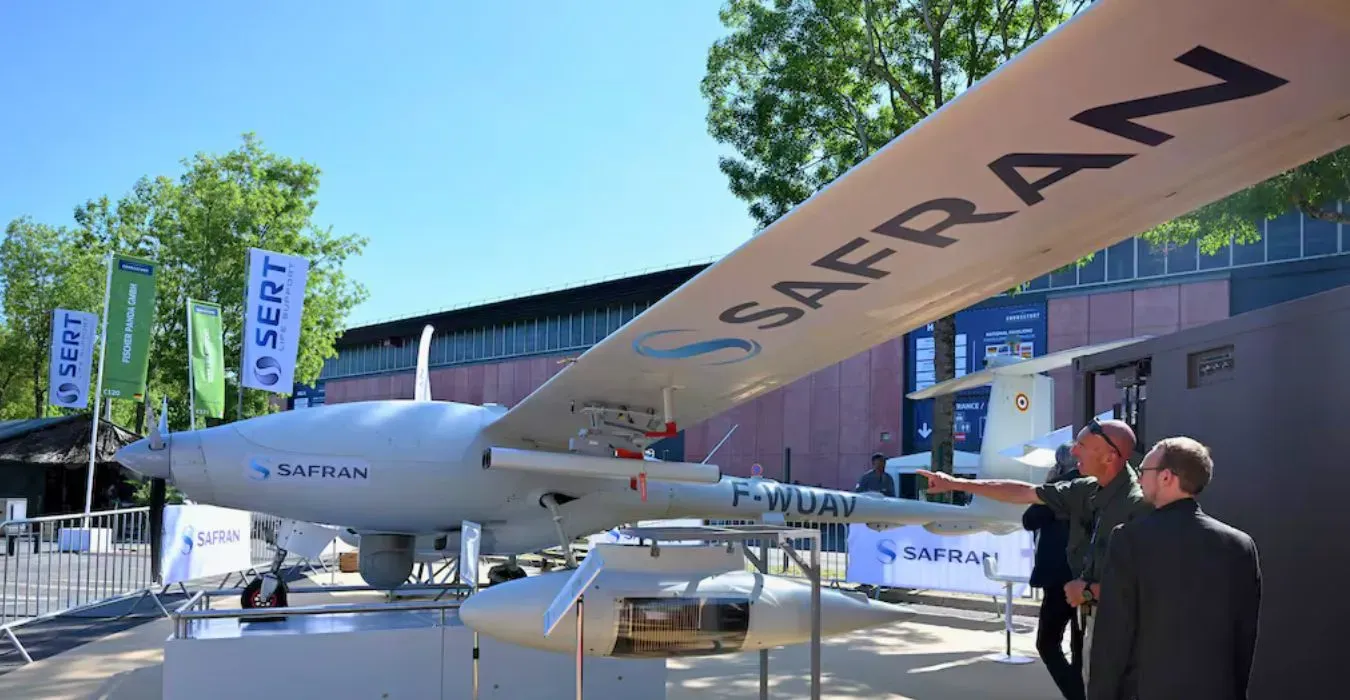
France’s recent call for a European nuclear umbrella is not only redefining the continent’s security dynamics but is also propelling a wave of investment in cutting-edge AI and drone technologies that will underpin this strategic shift. Announced on March 7, 2025, President Emmanuel Macron’s proposal to extend French nuclear deterrence to European allies is driving a comprehensive modernisation of defence capabilities, focusing heavily on unmanned systems, AI-enhanced surveillance and autonomous threat detection. His announcement raised the possibility of sending European troops to Ukraine to enforce a peace deal, as Europe scrambles to respond to Donald Trump’s upending of the transatlantic alliance.
A €500 Million Push for AI-Powered Defence Systems
Defence insiders and industry watchers on platforms like X (formerly Twitter) have been buzzing about a €500 million contract tender released by the French Ministry of Armed Forces. The tender focuses on next-generation autonomous systems designed to complement nuclear deterrence through high-tech surveillance, early warning and potential strike capabilities. Key players Dassault Aviation and Safran, long-standing titans in aerospace and defence, are already reportedly developing advanced drones and AI-based platforms that would integrate seamlessly with France’s existing nuclear and conventional forces. “The fusion of AI and autonomous aerial systems is not just a technological upgrade — it’s a new doctrine of deterrence and rapid respons,” said a senior defence analyst at the Paris-based think tank IRIS (Institut de Relations Internationales et Stratégiques).
European Defence Leadership in the Making By linking nuclear deterrence with AI-driven defence solutions
France aims to project a robust and modernised defence shield over Europe, especially as geopolitical tensions rise. This move could also redefine France’s role within NATO and the EU, positioning Paris as the central pillar of European security, independent yet complementary to U.S. strategic capabilities. According to leaked government reports, the upcoming AI-drone platforms are expected to include: stealth autonomous drones capable of deep surveillance and rapid-response strikes, AI-coordinated swarming systems for airspace defence and early threat neutralisation and next-gen missile defence integration, supported by real-time AI analytics and predictive modelling.
In his address to the Nation on March 5
Macron said that the French were “legitimately worried” about the start of a “new era” after Trump began his second stint in the White House by reversing US policy on Ukraine and risking a historic rupture with Europe. He said “I want to believe that the United States will stay by our side but we have to be prepared for that not to be the case. The future of Europe does not have to be decided in Washington or Moscow.”
Industry Reactions and Strategic Implications
Industry leaders have welcomed the move, seeing it as a long – awaited step to modernise Europe’s defence architecture. “France is showing the way in combining nuclear deterrence with AI and robotics — it’s a game changer for European defence industries and strategic autonomy,” noted a spokesperson for Dassault Aviation. Moreover, the initiative reflects France’s broader ambition to lead in the AI defence sector, following previous calls for European technological sovereignty.
Conclusion:
A New Age of Deterrence As France aligns its nuclear umbrella ambitions with AI and drone advancements, it signals the dawn of a new age in European defence — where autonomy, rapid reaction and technological superiority become as critical as traditional deterrence measures. With the €500 million investment pipeline, France is not only fortifying its own security but also redefining the strategic landscape for its European allies in an increasingly volatile world.
