
Abstract
This article critically examines the evolving cultural positioning of the Indian film industry—referred to here as B(harat)ollywood—in the backdrop of rising geopolitical tensions and India’s national security priorities. While Bollywood has long served as a soft power instrument globally, its repeated cultural and economic collaborations with Turkey—a country openly supporting anti-India narratives—raise serious concerns. Through a focused analysis of recent developments, including the Boycott Turkey movement and the post-Operation Sindhoor policy orientation led by Prime Minister Narendra Modi, the article interrogates whether cultural capital should continue to be extended to nations actively undermining Bharat’s strategic interests. By tracing financial, symbolic, and ideological support offered to Turkey through film shoots, tourism promotion and celebrity endorsements, the article argues for a fundamental realignment of India’s cultural diplomacy. The need to rethink Bollywood’s international collaborations, particularly with anti-Bharat alliances, is no longer optional—it is a sovereign imperative.
Introduction
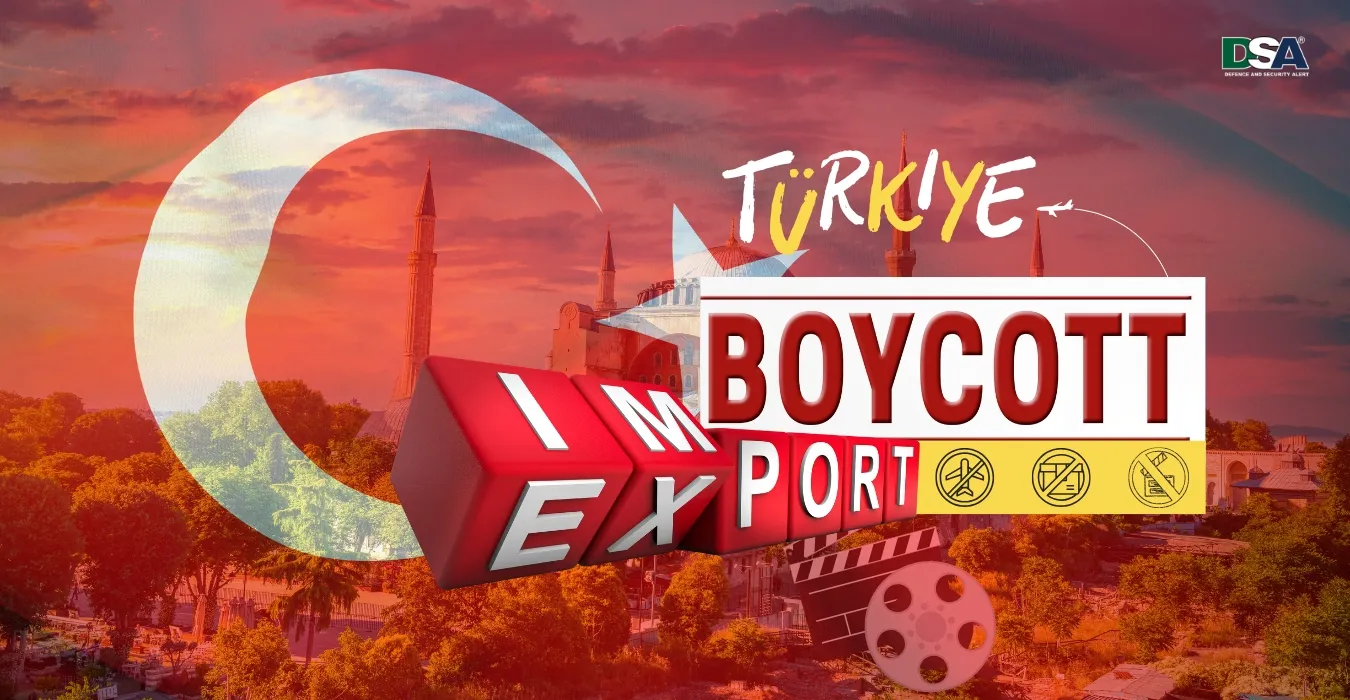
The ongoing #BoycottTurkey campaign in India has gained unprecedented momentum following Turkey’s repeated diplomatic support to Pakistan and its narrative on Jammu and Kashmir. After the precision-led Operation Sindoor launched on May 7, 2025, by Indian defence forces in retaliation to the Pahalgam terror attack that killed 26 tourists, public sentiment across India has tilted strongly against countries perceived to be aligning with narratives contrary to India’s strategic and territorial interests. Turkey’s vocal support of Pakistan at global platforms—including its statements on Kashmir at the UN—has placed it under increasing scrutiny in India’s trade, diplomatic and now cultural spheres.
A range of Indian institutions and civil society actors responded promptly, reflecting a coordinated national sentiment. The Confederation of All India Traders (CAIT) announced a nationwide boycott of trade and commercial ties with Turkey and Azerbaijan, responding to their support to Pakistan following India’s Operation Sindoor. In Rajasthan, Udaipur’s marble industry suspended imports worth ₹3,000 crore from Turkey, while Maharashtra traders declared a complete boycott of Turkish apple imports. Ease My Trip issued a travel advisory recommending that trips to Turkey and Azerbaijan be undertaken only if unavoidable, aligning with the national sentiment. Furthermore, pr-minent Indian universities, including IIT-Roorkee, JNU, and Jamia Millia Islamia, have suspended academic MoUs with Turkish institutions, reflecting a broader reassessment of educational collaborations.
In the cultural space, the response has sharpened. The Federation of Western India Cine Employees (FWICE), along with the All India Cine Workers Association (AICWA), has officially urged Indian filmmakers to avoid Turkey as a shooting destination. Their statements cite not only Turkey’s hostile diplomatic conduct but also underline that “the nation must come first—even in cinema” (The Week, 2025). Despite this, sections of Bollywood continue to collaborate with Turkish agencies for filming, branding, and location-based promotions—raising a fundamental question: should India’s film industry continue supporting economies and regimes that directly or indirectly endorse anti-India posturing?
This article focuses on the economic, cultural, and symbolic links between Bollywood and Turkey and assesses whether these engagements serve or dilute India’s strategic interests in the current geopolitical context.
Bollywood’s Economic and Cultural Engagement with Turkey
Over the past decade, Bollywood has significantly contributed to Turkey’s economy through film productions. Notable films shot in Turkey include Ek Tha Tiger (2012), Dil Dhadakne Do (2015), and Tiger-3 (2023) among others. These productions have utilised Turkish landscapes, architecture and local talent, injecting substantial revenue into the local economy (Daily Sabah, 2021). Furthermore, Indian actors like Salman Khan and Katrina Kaif have publicly praised Turkey’s hospitality and beauty, enhancing its appeal as a tourist destination among Indian audiences (Anadolu Agency, 2021).
In 2017, Eros International signed a two-film co-production agreement with Turkish studio Pana Film. The collaboration was projected to integrate Turkish landscapes and storytelling into Indian narratives, offering cultural synergy but also extending economic support to Turkey’s film and hospitality sectors (Bollyspice, 2017). Simultaneously, local Turkish vendors, transport agencies, stylists, and crew were routinely employed in Indian productions, strengthening an ecosystem that directly benefited from Indian capital and star-driven visibility.
Additionally, Indian social media influencers and production houses have promoted Turkish destinations through cinematic reels and song sequences. The symbolic endorsement of Turkey by high-profile celebrities translated into increased tourism interest and revenue. According to a report by the Economic Times, Indian tourists spent nearly ₹4,000 crore in Turkey and Azerbaijan in 2022 alone (Economic Times, 2025). This number is not insignificant given the context of Turkey’s anti-India political narrative.
Turkey’s Strategic Posturing Against Bharat
While Bollywood continued to support Turkey economically and culturally, Ankara’s political stance has remained openly antagonistic on key strategic issues. President Recep Tayyip Erdoğan has, on multiple occasions, brought up the Kashmir issue in multilateral forums, including the United Nations General Assembly, often echoing Pakistan’s position. His statements in 2019 and again in 2020 were sharply criticised by India, which reminded Turkey of the principle of non-interference in internal affairs (MEA, 2020). Despite diplomatic protests by India, Turkey has neither retracted its position nor moderated its engagement with Pakistan on the matter (NDTV, 2020).
In 2024, Turkey signed a fresh drone supply deal with Pakistan, including Asisguard Songar drones, many of which were reportedly used during cross-border provocations in the early stages of Operation Sindoor (The Week, 2025). This, combined with Turkish naval movements in the Arabian Sea and growing Turkey-Azerbaijan-Pakistan trilateral engagement, has placed Ankara in a firm category of “anti-Bharat alignment” in the public eye.
A Response from Bharat’s Civil and Cultural Sectors
India’s civil society, trade bodies, and now creative industries are asserting the principle that economic engagement must align with strategic and national interest. The Confederation of All India Traders (CAIT) has urged Indian businesses to immediately stop importing Turkish goods. Textile, marble, and dry fruit traders in Gujarat, Rajasthan, and Maharashtra have cancelled their contracts, amounting to nearly ₹3,000 crore in suspended imports (Times of India, 2025).
In a parallel move, FWICE and AICWA issued advisory letters asking film producers and directors to refrain from shooting in Turkey. “When a country speaks against our unity and soldiers, it is unethical to support them economically under the guise of art,” read a statement by a senior FWICE representative (The Week, 2025). The moral framing of the boycott is as important as its economic rationale—it reflects a changing Indian consciousness that expects its cultural icons and industries to respect the sentiments of the nation.
The Cultural Cost of Compromise
The core dilemma for Bollywood is no longer aesthetic-it is ideological. Continuing to shoot, promote, or collaborate with states that actively undermine India’s territorial integrity and diplomatic interests is being seen not as cultural neutrality, but strategic carelessness. The public backlash is not abstract. Multiple Bollywood stars who posted from Turkish locations faced sharp criticism on Indian social media platforms for what was seen as tone-deaf timing.
Moreover, Turkish television and cinema have not reciprocated Bollywood’s outreach with meaningful collaborations, cultural neutrality or market openness. On the contrary, many Indian films released in Turkey are limited to niche audiences, and Indian narratives are often absent from mainstream Turkish media channels (Daily Sabah, 2023). The soft power flow has largely been one-way—and increasingly, at the cost of national sentiment.
Conclusion
The time has come for B(harat)ollywood to choose cultural sovereignty over commercial short-termism. The ongoing #BoycottTurkey sentiment is not rooted in jingoism—it is a rational, nationalistic and strategic response to repeated diplomatic provocations and military alignments that go against Bharat’s interests. Cultural industries cannot function in isolation from geopolitics, especially in the post-Operation Sindoor era where information, symbols, and alliances matter as much as missiles and markets.
India’s strategic posture under Prime Minister Narendra Modi has been clear-no trade and no trust with nations supporting terror or questioning India’s unity. It is imperative that this principle guide the country’s cultural engagement as well. Bollywood, as one of India’s strongest soft power arms, has a responsibility to uphold national dignity by refusing to support, partner with or economically strengthen regimes that stand in opposition to Bharat.
As Bharat redefines its cultural sovereignty in the post-Operation Sindoor era, theB(harat)ollywood too has started to answer this call.
“Rāṣṭreṇa vinā na kiñcit, rāṣṭraṃ rakṣati rakṣitam.”
Without the nation, nothing remains; protect the nation, and it shall protect you.
— Chanakya Niti
References
- Bollyspice. (2017). Eros International signs two-film co-production deal with Turkish film company Pana Film. https://bollyspice.com/eros-international-signs-two-film-co-production-deal-with-leading-turkish-film-company-pana-film/
- Daily Sabah. (2021, January 1). Bollywood in Turkey: Favorite haunt of Hindi movies. https://www.dailysabah.com/arts/cinema/bollywood-in-turkey-favorite-haunt-of-hindi-movies
- Anadolu Agency. (2021, September 4). Visiting Indian movie stars laud ‘beautiful, incredible’ Turkey. Daily Sabah. https://www.dailysabah.com/arts/cinema/visiting-bollywood-stars-list-turkey-among-favorite-places-to-film
- Economic Times. (2025, May 13). Please skip Turkey and Azerbaijan: Harsh Goenka calls for tourism boycott. https://economictimes.indiatimes.com/magazines/panache/please-skip-turkey-and-azerbaijan-harsh-goenka-calls-for-tourism-boycott-amid-india-pakistan-conflict/articleshow/121166411.cms
- MEA India. (2020, February 17). Statement on Turkey President’s remarks on Jammu and Kashmir. https://mea.gov.in/response-to-queries.htm?dtl/32421/
- NDTV. (2020, September 23). India slams Turkey on Kashmir remarks, calls it interference. https://www.ndtv.com/india-news/india-slams-turkey-on-kashmir-remarks-completely-unacceptable-2299630
- The Week. (2025, May 14). Indian film bodies FWICE, AICWA ask producers to boycott Turkiye for film shoots over pro-Pakistan stance. https://www.theweek.in/news/entertainment/2025/05/14/indian-film-bodies-fwice-aicwa-ask-producers-to-boycott-turkiye-for-film-shoots-over-pro-pakistan-stance.html
- Times of India. (2025, May 16). Traders’ body vows to boycott Turkiye, Azerbaijan products. https://timesofindia.indiatimes.com/city/delhi/traders-body-vows-to-boycott-turkiye-azerbaijan-products/articleshow/121218985.cms
- Indiatimes. (2025, May 13). Udaipur halts ₹3,000 crore marble imports from Turkey for backing Pakistan in Op Sindhoor. https://indiatimes.com/news/udaipur-halts-rs-3000-cr-marble-imports-from-turkey-for-backing-pakistan-in-op-sindhoor-india-needs-no-allies-say-netizens-658902.html
- Trends Newsline. (2025, May 13). Maharashtra traders boycott Turkish apples in political stand. https://trendsnewsline.com/2025/05/13/maharashtra-traders-boycott-turkish-apples-in-political-stand/
- Business Today. (2025, May 9). EaseMyTrip urges Indians to avoid non-essential travel to Turkey, Azerbaijan amid India-Pakistan tensions. https://www.businesstoday.in/latest/corporate/story/easemytrip-urges-indians-to-avoid-non-essential-travel-to-turkey-azerbaijan-amid-india-pakistan-tensions-475457-2025-05-09
- Times of India. (2025, May 15). IIT-Roorkee joins list of institutions cutting Turkey links; AIU urges nationwide review. https://timesofindia.indiatimes.com/india/iit-roorkee-joins-institutions-which-have-cut-turkiye-links/articleshow/121220649.cms
Disclaimer
The views expressed in this article are personal to the author and do not necessarily reflect the official position of the authors or any affiliated organizations. The data and insights presented are derived from secondary sources and have been analysed using AI tools for content creation. Readers are advised to independently verify the information before forming any conclusions or taking action.
