
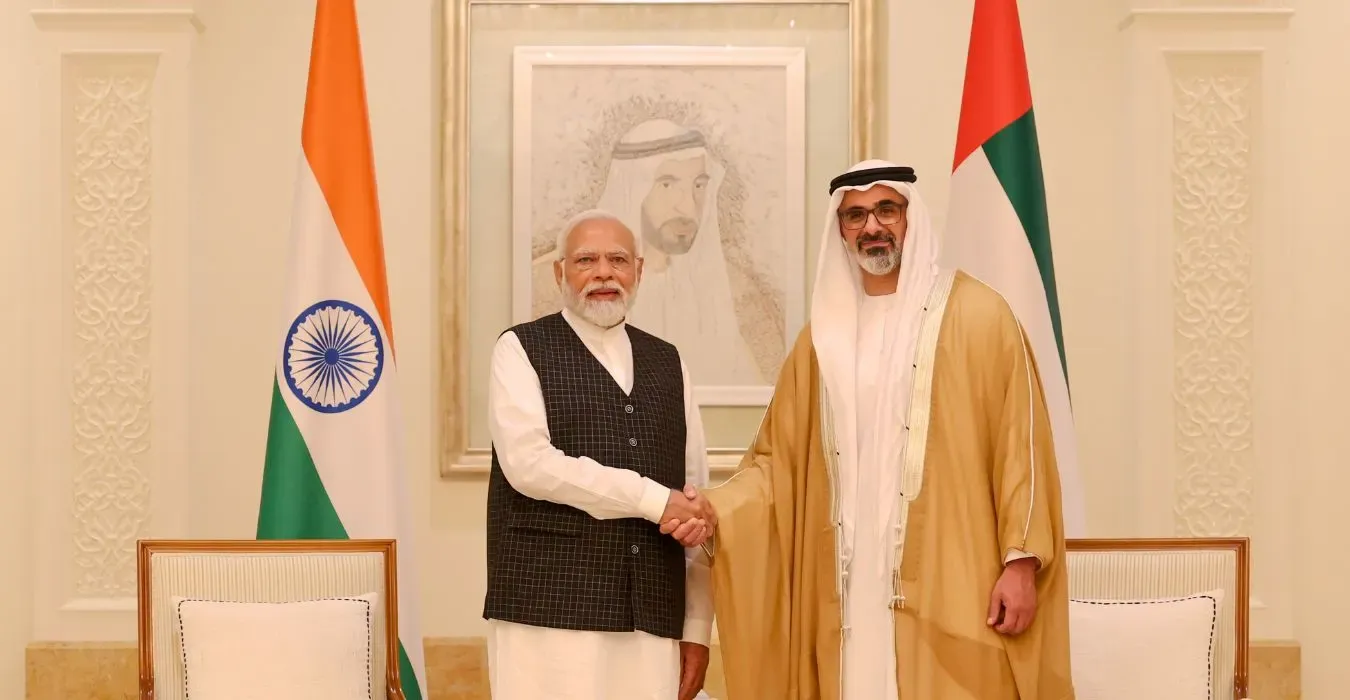
India-UAE bilateral relations, officially established in 1972, have grown into a strong strategic partnership, particularly after Prime Minister Narendra Modi’s landmark visit in 2015. This visit revitalised ties between the two countries, leading to several high-level exchanges, including multiple visits by UAE President HH Sheikh Mohamed bin Zayed and the Indian Prime Minister. Economic cooperation has surged, with bilateral trade reaching $85 billion in 2022-23, making UAE the third largest trading partner of India and a significant investor, especially in infrastructure and renewable energy. A significant elevation in India-UAE bilateral relations is marked by Abu Dhabi’s Crown Prince Sheikh Khaled bin Mohamed bin Zayed Al Nahyan’s visit to Bharat (September 9-10, 2024) concluded with the signing of an MoU on Civil Nuclear Cooperation. As of 2024, India has signed civil nuclear cooperation agreements with over 14 countries includig the United Arab Emirates (UAE). These agreements are aimed at enhancing cooperation in the peaceful use of nuclear energy.
This civil nuclear deal between India and UAE marks a significant milestone for India’s global image as a responsible and progressive state in nuclear diplomacy. It reinforces India’s global standing as a responsible nuclear power, committed to international safeguards while expanding its civil nuclear capabilities.
By advancing peaceful nuclear cooperation, India not only strengthens its diplomatic influence but also demonstrates its leadership in addressing critical global challenges. In the face of escalating political and environmental crises, India’s advocacy for nuclear energy as a clean and sustainable resource aligns with its broader climate action goals, highlighting its commitment to achieving the Net Zero emissions target by 2070 as announced by our Hon’ble Prime Minister Shri Narendra Modi at the 26th session of the Conference of the Parties(COP26)to the United Nations Framework Convention on Climate Change(UNFCCC)held in Glasgow, United Kingdom in November 2021.
In this regard, India has initiated steps to increase its share of nuclear power capacity. India firmly believes that nuclear power is a clean and environment-friendly source of electricity, which is available 24X7 and can provide the country with long-term energy security in a sustainable manner. The growth of the Indian nuclear power programme is imperative to meet the twin goals of energy security and sustainable development.
Simultaneously, India’s adherence to non-proliferation norms underscores its dedication to promoting peace and stability in an increasingly volatile world. This deal exemplifies how India is balancing its pursuit of energy security with its responsibilities as a global advocate for climate resilience and conflict prevention, positioning itself as a model for other nations seeking to harness nuclear energy for peaceful purposes.
Despite the promise of the India-UAE civil nuclear deal, several challenges lie ahead. One of the primary concerns is ensuring compliance with stringent international safeguards while maintaining transparency in nuclear operations. As India expands its civil nuclear capabilities, logistical and technical challenges, such as the development of advanced nuclear infrastructure and ensuring the safe disposal of nuclear waste, present significant hurdles.
Conclusion
While challenges exist, the India-UAE civil nuclear deal represents a positive step forward for India’s energy security, diplomatic relations and global leadership in climate action and peaceful nuclear cooperation. By successfully navigating the regulatory, technical and geopolitical complexities, India can further cement its role as a responsible nuclear power and a key advocate for sustainable development. The deal has the potential to not only enhance India’s energy landscape but also set a powerful example for other nations in addressing both environmental and geopolitical challenges through peaceful and collaborative means. With strategic planning and continued commitment, the future of this partnership holds immense promise for India’s progress on the global stage.
