
From Op Sindoor to AI: Doval Inspires IIT Madras Graduates
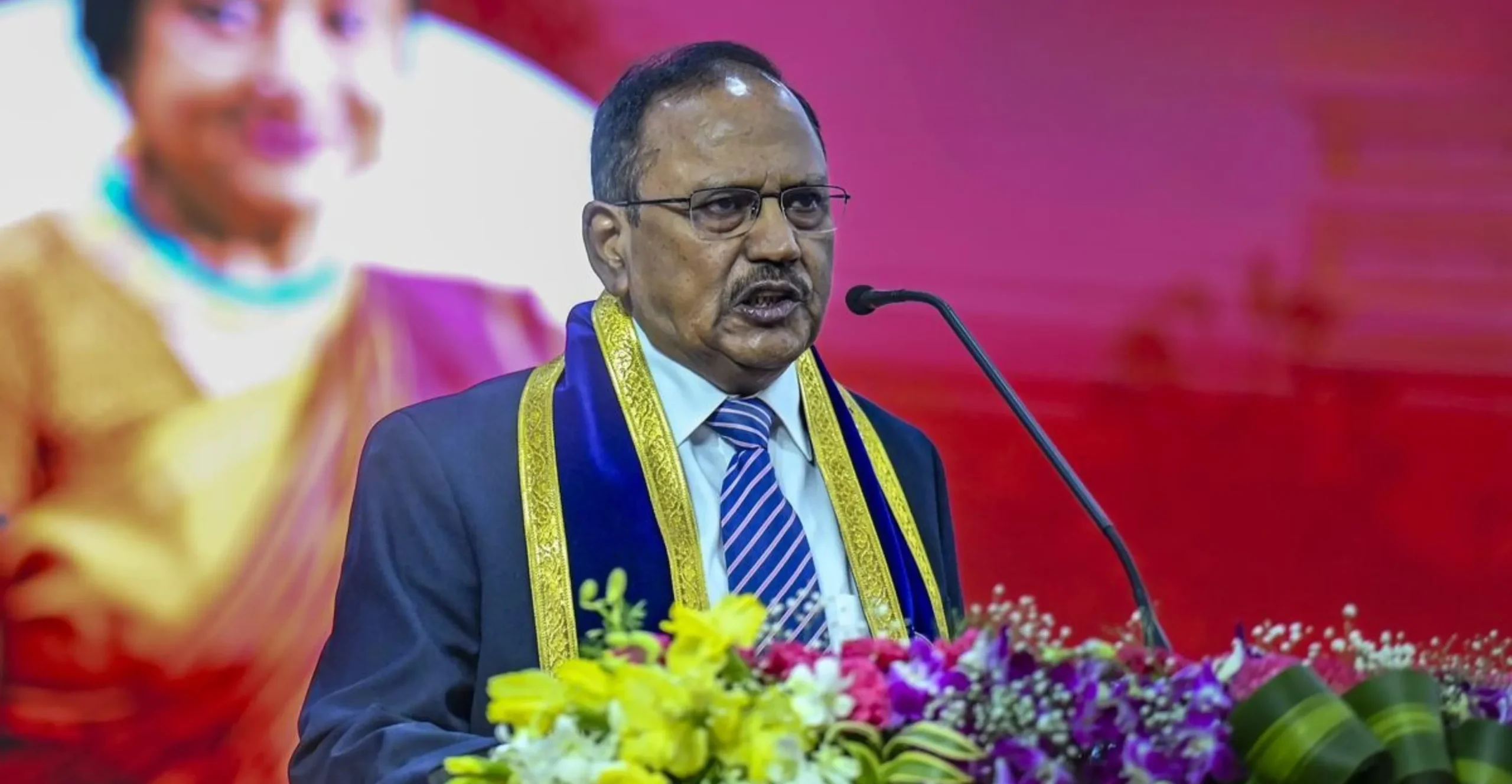
On 11 July, India’s National Security Advisor Ajit Doval addressed the convocation of IIT Madras. It was not a typical ceremonial speech. It was a message laced with confidence, clarity and strategic vision. Doval spoke about India’s changing role in the world, the power of indigenous technology, the threat landscape, on Operation Sindoor and the responsibility of India’s youth.
This is the first time after Operation Sindoor, NSA Doval destroyed the fake perception built by Pakistan during his address. Let’s break down what he said and why it matters.
Operation Sindoor: Precision Without Provocation
NSA Doval began by addressing the recent Operation Sindoor, India’s surgical counterstrike against terrorist targets in Pakistan. He said India chose 9 targets and destroyed all of them in a 23-minute operation. Not a single target was missed.
He then responded to the claims in foreign media that India had lost fighter jets which Pakistan had retaliated against again and again. Doval dismissed these as false. “Tell me one photograph, one image that shows any damage to India—even a broken glass pane,” he challenged.
This was not just pride—it was a statement of capability. India hit back, with accuracy, without escalating into a wider war. The fact that India achieved this without any domestic damage shows the maturity of India’s security response. At the same time, India has normalised the limited use of force in response to any terrorist attack on its terrorist attack sponsored by Pakistan.
Indigenous Defence Systems: A Point of Pride
Doval highlighted a key detail about Operation Sindoor- it was entirely executed using indigenous systems. From BrahMos missiles to radars to communication equipment, all were developed in India.
“We are proud of them,” he said. This pride is justified. For decades, India relied on imported military hardware. But today, missions like Sindoor show that ‘Make in India’ is not just a slogan-it’s working in defence not just in defending our territory but also in exporting to other nations.
This push for self-reliance is not just about saving money. It is about national security. In a conflict, depending on foreign-made systems comes with risks—delays, sanctions, or backdoors. India’s message is now clear: We will fight with what we make.
Nation First, Always
NSA Ajit Doval turned his attention to the young graduates. He told them a story of an IIT graduate who moved abroad, became a US citizen, and later regretted that he could not contribute to India.
“You need to have passion for your nation,” Doval said. He was urging students to not just be job seekers or tech wizards-but nation builders.
This message is important. In a globalised world, many Indian students dream of foreign degrees or jobs. That is not wrong. But Doval’s point is: Do not forget your roots. Let your talent serve your country.
The China Factor: Push for Trusted Tech
NSA Doval referred to the 2020 Galwan Valley clash with China. That clash did not just change our military posture. It changed how we look at technology and dependency.
China had taken 12 years and 300 billion dollars to build its 5G network. India did not have that kind of time or resources. But we had urgency. Doval proudly said India built its own trusted communication systems in just 2.5 years, with the help of its private sector.
This is critical. Communication systems are the backbone of modern warfare. If they are compromised, the entire defence architecture can collapse. That’s why India’s move toward indigenous, secure and trusted tech is not a luxury—it is a necessity.
AI: The Next Battleground
Doval made a strong comment about Artificial Intelligence: “AI will change the world.”
This is not an overstatement. From military drones to cyberwarfare to economic models-AI will be everywhere. India cannot afford to lag behind.
NSA Doval’s warning is clear. Whoever controls AI and data, controls the future. That’s why India must lead in this space. Not only for economic growth, but also for data protection, national security and digital sovereignty. The place where he highlighted the security qualities of AI is also worth noting. IITs have been India’s top technologically advanced institutions and mentioning AI’s role in defence and security motivates future generations to work hard in the field.
A Vision of Growth
NSA does not end there, he also mentioned and painted a powerful picture of our nation. By the time India turns 100 in 2047, he said:
- India will have a GDP of $32 trillion
- A working-age population of 1.1 billion—the largest in the world
- In contrast, China will have 700 million workers
This is not just about numbers. It is about India becoming the world’s largest market, workforce, and innovation hub. But this future would not arrive by default. It will need strong institutions, policy vision, and citizen contribution.
Lessons from Bengal Famine
NSA also made a poignant reference to India’s past. “The Bengal Famine of 1943 killed 60 lakh people,” he said. “Yet nobody talks about it”
This is a reminder of the suffering India went through under colonial rule. It’s also a subtle warning: don’t forget history, or you risk repeating its mistakes.
A Strategic and Moral Doctrine
Ajit Doval’s speech at IIT Madras was more than inspiration. It was part strategic briefing, part moral call, and part policy signal. He reminded us that security does not only lie in guns or borders—but in minds, labs, and factories.
India’s youth, he believes, are not just the future of the economy—they are the future of sovereignty, resilience, and strategic autonomy.
