
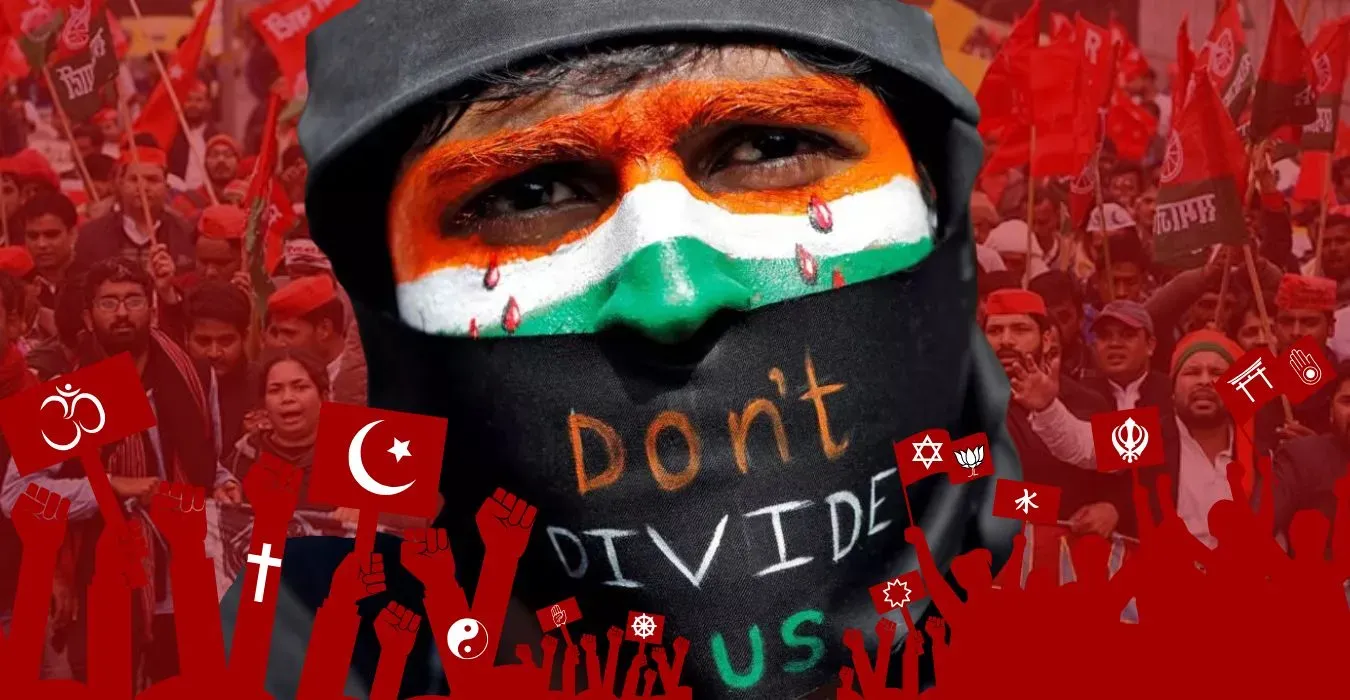
The partition of British India into India and Pakistan set the stage for future demands for self-determination, autonomy and independence by various groups. The Indian Constitution, while federal in nature, grants significant powers to the central government, which has often been perceived as a source of contention by regional and ethnic groups seeking greater autonomy.
Jammu and Kashmir
The Jammu and Kashmir region has been a focal point of separatism, with disputes over its accession to India and demands for self-determination by its Muslim-majority population. The abrogation of Article 370 in 2019, which revoked Jammu and Kashmir’s special status, has intensified tensions. In 2024, Jammu and Kashmir held their first assembly elections in over a decade, with the National Conference (NC) emerging as the largest party, forming a coalition with Congress to secure a majority. The assembly passed a resolution seeking the restoration of Article 370, but the central government under Prime Minister Narendra Modi dismissed these calls, reaffirming the applicability of the Indian Constitution in full. Despite these political developments, militant groups like Hizbul Mujahideen and Lashkar-e-Taiba continue to pose significant security challenges, while human rights concerns over repression remain prominent.
Separatism in the North-Eastern Region
The northeastern region of India has experienced various separatist movements, each with unique historical contexts and recent developments. Here’s an overview:
Nagaland
The Naga people’s demand for a sovereign “Nagalim” has been a longstanding issue, with the National Socialist Council of Nagaland (NSCN) leading the movement. Despite ongoing peace talks, a final agreement remains elusive. The NSCN continues to advocate for greater autonomy and the lack of resolution perpetuates uncertainty in the region.
Manipur
Manipur has faced insurgencies from groups like the United National Liberation Front (UNLF). Recent ethnic clashes between the Meitei and Kuki communities have intensified tensions. In November 2024, parts of Manipur observed shutdowns after paramilitary forces killed 10 individuals labelled as “armed militants.” Local ethnic organisations contested this characterisation, claiming the deceased were village volunteers protecting their communities. The state has witnessed ongoing ethnic violence since May 2023, resulting in approximately 250 deaths and displacing 60,000 people.
Assam
Assam’s insurgencies, primarily led by the United Liberation Front of Asom (ULFA), have seen a decline due to peace initiatives. However, splinter factions remain active and issues related to illegal migration and demands for autonomy continue to influence the state’s socio-political landscape.
Tripura and Mizoram
In Tripura, the historical influx of refugees altered the demographic balance, leading to tribal insurgencies. While major insurgent activities have decreased, underlying ethnic tensions persist. Mizoram experienced militancy due to inadequate responses to crises like the “Mautam famine.” The Mizo National Front’s demand for independence in 1966 led to significant unrest. Although the region has achieved relative peace, aspirations for greater autonomy occasionally surface.
In summary, while some northeastern states have made progress toward peace, others continue to grapple with insurgencies and ethnic conflicts. Ongoing dialogue and addressing the root causes of these movements are essential for lasting stability in the region.
The Khalistan movement
The Khalistan movement, which emerged in the 1980s, sought to establish an independent Sikh homeland in Punjab. This period was marked by significant events, including Operation Blue Star and the assassination of Prime Minister Indira Gandhi, leading to a violent phase in the movement. While its influence has diminished within India, some support persists among the Sikh diaspora abroad.
In recent years, the movement has seen a resurgence, particularly among Sikh communities overseas. Notably, during the 2020 anti-farm bills protests in India, there were speculations of involvement by banned pro-Khalistani groups such as Sikhs for Justice (SFJ).
Additionally, in 2023, tensions between India and Canada escalated following the assassination of Sikh activist Hardeep Singh Nijjar. Canadian Prime Minister Justin Trudeau accused Indian government agents of involvement in Nijjar’s killing, leading to diplomatic expulsions between the two nations. India has denied these allegations, dismissing them as politically motivated.
These developments indicate that while the Khalistan movement’s presence within India has waned, it continues to influence international relations, particularly in countries with significant Sikh populations.
Left-Wing Extremism (Naxalism)
Left-wing extremism, or Naxalism, has been another significant separatist force, advocating for a communist state to address agrarian and tribal grievances. Concentrated in central and eastern India, Naxalite activities have declined due to government counterinsurgency operations and development programs, though sporadic violence continues.
The Dravidian Movement in Tamil Nadu
The Dravidian movement in Tamil Nadu initially sought an independent Dravida Nadu, encompassing South Indian states, to protect linguistic and cultural identity. By the 1960s, secessionist demands declined due to constitutional constraints and waning support. The movement transitioned to advocating greater state autonomy within India, focusing on Tamil identity and resisting Hindi imposition.
Factors Driving Separatism
Several factors drive separatism in India, including ethnic and cultural diversity, economic disparities, the colonial legacy of arbitrary boundaries and the centralisation of power. External influences, such as Pakistan’s support for militancy in Kashmir or cross-border ethnic ties in the Northeast, have further exacerbated tensions.
Government Responses
The Indian government has employed a range of strategies to address separatist movements. Military measures, including the deployment of armed forces and laws like the Armed Forces Special Powers Act (AFSPA), have been used in insurgency-hit areas. Peace negotiations, such as the Mizo Accord (1986), have successfully resolved some conflicts. Development initiatives targeting infrastructure and economic growth have also been implemented to address grievances. Additionally, granting autonomy or special status, as seen with the creation of new states like Telangana, has helped quell some demands.
Challenges and Path Forward
While many separatist movements in India have declined, underlying issues of identity, autonomy and development persist. Inclusive governance, equitable representation, economic empowerment, dialogue and cultural sensitivity are critical to addressing these challenges. India’s strength lies in its diversity and managing this diversity requires a delicate balance between unity and respect for regional aspirations. By addressing the root causes of separatism, the nation can strive for a more inclusive and harmonious future.
