
 SECURITY ALERT

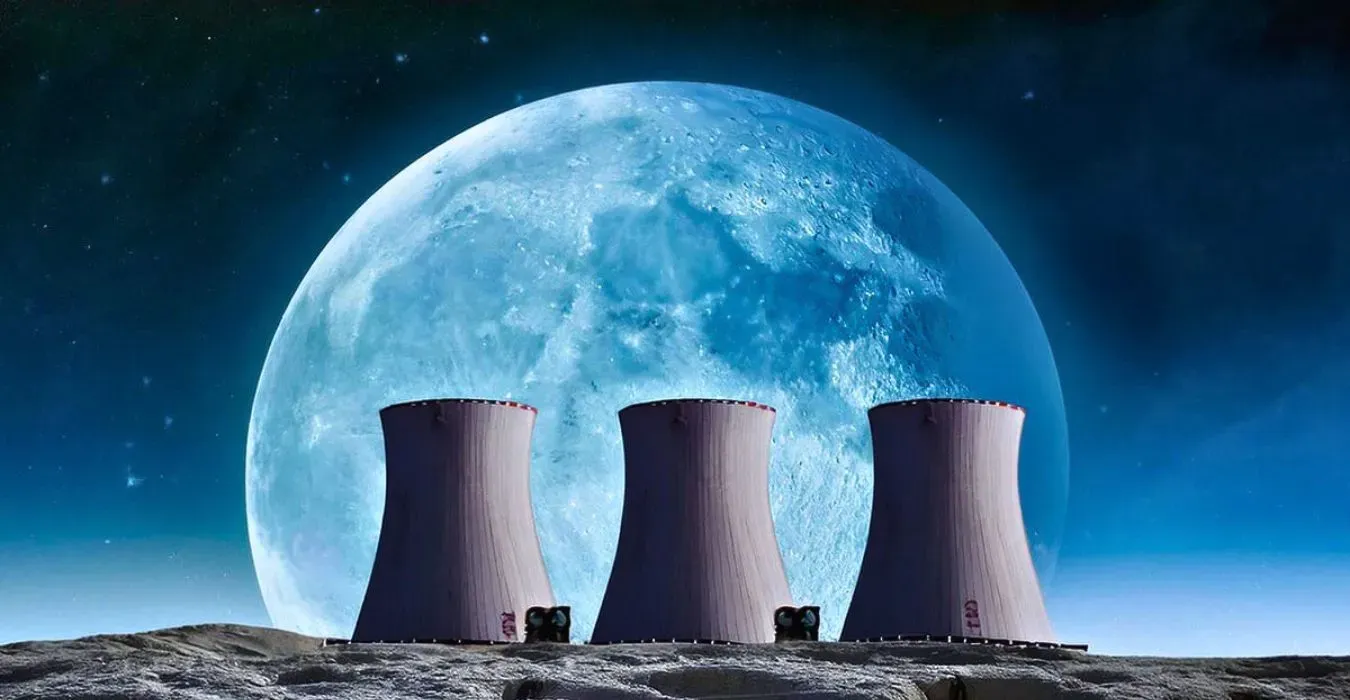
Ever since mankind conquered the moon, the plan for a lunar outpost gained momentum. But Astronauts or Cosmonauts living on the moon will need an assured round-the-clock power supply. Carrying fuel from Earth is not feasible. Neither solar panels nor diesel generators will work and the old-style radio-thermal generators are not big enough to be effective. So, setting up a power plant on the moon’s surface remains the only viable option. Decades ago, Russia conceptualised a moon base and has been working on it assiduously. China announced in 2021 that it would set up an International Lunar Research Station on the moon with a view to interplanetary exploration.

In March 2024, Russian space agency Roscosmos announced its intention to build a nuclear reactor on the lunar surface in collaboration with China’s National Space Administration. “Today we are seriously considering a project, somewhere at the turn of 2033–2035, to deliver and install a nuclear power unit on the lunar surface together with our Chinese colleagues” – declared Roscosmos Director General Yury Borisov. The proposed reactor would be used to supply power to the Russian-Chinese International Lunar Research Station, plans for which were unveiled in 2021. A former deputy defence minister, Borisov described the reactor plan as a very serious challenge, given the fact that robotic technology would be used for construction and that a solution to cooling the lunar reactor has not yet been found. As nuclear reactors will be crucial for powering eventual human settlements on the moon, Russia now wants India to be a partner in this project – inviting Indian innovation to make the mission of manufacturing a new generation miniature nuclear reactor for lunar use a grand success. Significantly, India is also a signatory to the US’ Artemis Project for outer space exploration. Russia’s lunar nuclear project comes on top of previously announced plans by the US and UK for establishing nuclear reactors on the moon. While NASA has set a target date of delivering a prototype nuclear reactor to the moon by the early 2030s, the UK’s Space Agency, in collaboration with nuclear submarine reactor manufacturer Rolls-Royce, is engaged in creating a demonstration model, ready for lunar delivery by 2029.
For many years, the US and Russia have been working on designs for a nuclear fission reactor to power the moon base and so has China in recent times. America’s programme on space nuclear reactors goes back to the 1980s. It studied a wide range of designs with propulsion and supply for any future lunar base in mind. Russia, on the other hand, worked on high-temperature modular gas-cooled reactors in the 1980s and finalised a design in 2001, but abruptly shelved the plan to manufacture several units by 2015. China built a 10MW pebble bed reactor HTR-10 initially and thereafter progressed to 250MW units commissioned in 2021. Based on this experience Chinese scientists have designed a 500KW reactor for use in its Lunar Research Station.
Conclusion
In effect, all these countries have developed the technology and also built demonstration models, which do not conform to the final requirement for space operations, however. The US could be about 3 years away from regulatory approval and licensing of the completed design, while construction will take 4 years. Since India has set a goal to establish its lunar base by 2050, does she have the technology for a base on the moon and power it independently by a micro nuclear reactor? It has to be light and robust to travel 384,400km and installed for use under extremely difficult conditions, withstanding the intrusive fine dust or regolith that covers the lunar surface.
“Indian nuclear scientists are capable of manufacturing a suitable reactor to supply power for a moon base. But we do not yet have a design that could be offered for safety clearance,” says Dr. LV Krishnan, eminent Nuclear Safety Expert and former Director of Safety Research Group at the Indira Gandhi Centre for Atomic Research in Chennai. Safety analysis of the space nuclear reactor system involves a laborious process covering every aspect of its life cycle – including, space launch, operation in the lunar environment and disposal of radioactive wastes due to accidental dispersal of as high as 250,000 miniature fuel spheres weighing about 1.3 grams each.
