
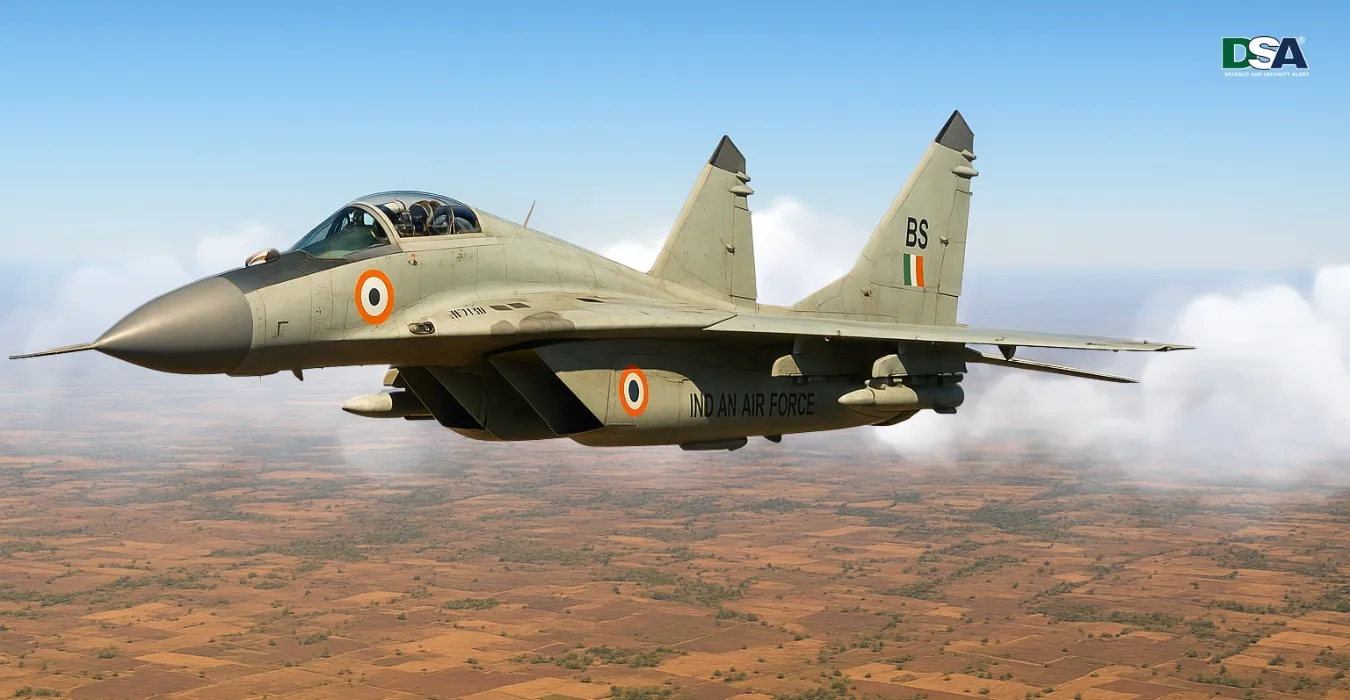
However, recent conflict between India and Pakistan (Operation Sindoor), have revealed a significant shift in air defence tactics. Neither India nor Pakistan maintained airborne CAPs for air defence during this operation, a marked departure from the established practice. This change is a direct result of the increased lethality and reach of modern air defense (AD) systems and long-range air-to-air missiles now fielded by both nations.

Advanced Air Defense Systems: Game Changers
Both India and Pakistan have deployed highly capable, mobile, and long-range AD systems that fundamentally alter the risk calculus for airborne CAP missions.

Long-Range Surface-to-Air Guided Weapons: An Alternative to CAP
With the increasing threat posed by advanced air defence systems, long-range surface-to-air guided weapons (SAMs) have emerged as a credible and effective alternative to traditional CAP missions. These systems offer several advantages:
- Extended Engagement Range: Modern long-range SAMs such as the S-400, S-300, and Patriot can engage enemy aircraft and missiles at ranges up to 400 km, covering vast swathes of airspace without the need for continuous airborne patrols.
- Persistent Coverage: Unlike CAPs that require constant rotation of aircraft and crews, ground-based SAM batteries can maintain a persistent defensive posture, ready to engage threats at any time.
- Reduced Risk to Pilots and Aircraft: By relying on ground-based systems, air forces can minimise the exposure of valuable aircraft and pilots to enemy air defences and long-range missiles.
- Layered Defence: Long-range SAMs can be integrated with medium- and short-range systems to create a multi-tiered shield, capable of intercepting a variety of aerial threats at different altitudes and ranges.
Examples of Long-Range SAM Systems
- S-400 (Russia/India): Engagement range up to 400 km, capable of targeting aircraft, cruise missiles, and ballistic missiles23.
- Patriot (USA): Effective range of around 150 km, widely used for both anti-aircraft and anti-missile roles.
- S-300 (Russia): Range up to 150 km, highly mobile and effective against multiple targets.
Impact on CAP Doctrine
With these advanced AD systems deployed close to borders in offensive postures, traditional CAP missions have become increasingly hazardous. Aircraft flying CAPs over even moderately in-depth enemy territory risk immediate engagement and destruction by long-range systems, such as the S-400. This credible threat has effectively deterred both sides from maintaining airborne CAPs during periods of heightened tension, as witnessed in Operation Sindoor.
“We can imagine CAP aircraft patrolling in-depth MOPs of Pakistan like Peshawar and Mian Wali in the killing range of S-400. Therefore, it is very difficult to fly a CAP mission with existing long-range AD weapons.”
Tactical Evolution: Counter-AD and Standby Forces
Given the vulnerability of airborne CAPs, air forces increasingly rely on:
- Layered, integrated air defence networks to protect critical assets and deter enemy air operations.
- Counter-AD operations, such as the use of precision strike drones (e.g., India’s Harop and Harpy) to neutralise enemy AD infrastructure before launching offensive air missions.
Way Forward: Strengthening India’s Air Defense Posture
To maintain a decisive edge over potential adversaries, India must continue to invest in and upgrade its long-range Air Defence (AD) capabilities, including indigenous development of advanced long-range SAM systems. This strategy is essential for establishing a credible deterrent, effectively denying enemy air forces the freedom to operate, and even keeping their aircraft grounded during periods of heightened tension.
1. Sustain and Enhance Long-Range AD Systems
- Maintain Technological Superiority: India’s deployment of advanced systems such as the S-400 provides a significant range and technological advantage. The continued acquisition, modernisation and indigenous development of longer-range and more sophisticated AD systems will ensure that India stays ahead of evolving threats.
- Layered Defense: Integrate short-, medium-, and long-range AD systems (Akash, MR SAM, SPYDER, S-400) to create a multi-tiered, overlapping defence shield capable of engaging a variety of aerial threats at different ranges and altitudes.
2. Credible Deterrence Against Enemy Air Operations
- Denying Enemy Airspace: By maintaining AD systems with ranges that cover not only border areas but also key enemy airbases and staging areas, India can deter adversaries from launching offensive missions, effectively rendering their aircraft on the ground.
- Forward Deployment: Position mobile AD assets in offensive postures near borders to maximize coverage and create uncertainty in enemy planning.
3. Adaptation of CAP Missions
- In-Depth CAP Operations: Restrict Combat Air Patrol (CAP) missions to in-depth Indian airfields and airspace, keeping them out of the range of enemy long-range AD systems. This reduces the risk to valuable assets while maintaining rapid response capability.
- Quick Reaction Alert (QRA): Rely on Operation Readiness Platforms (ORP) and Quick Reaction Alert aircraft at in-depth airfields to scramble and intercept threats as they arise, rather than maintaining continuous airborne patrols in contested zones.
4. Future Focus Areas
- Integrated Air Defense Network: Invest in seamless integration of sensors, command-and-control and weapon systems for real-time situational awareness and rapid responses.
- Counter-AD Capabilities: Develop and deploy Suppression of Enemy Air Defences (SEAD) assets, such as anti-radiation missiles and loitering munitions, to neutralise adversary AD systems when required.
- Indigenisation: Prioritise domestic research, development and production of advanced AD systems to ensure self-reliance and reduce dependence on foreign suppliers.
Conclusion
India’s ability to maintain and enhance long-range air defence systems—including advanced surface-to-air guided weapons-provides a credible and effective alternative to traditional CAP missions. By focusing on technological superiority, layered defences and adaptive tactics, India can ensure its air dominance and effectively neutralise enemy air threats before they materialise.
