
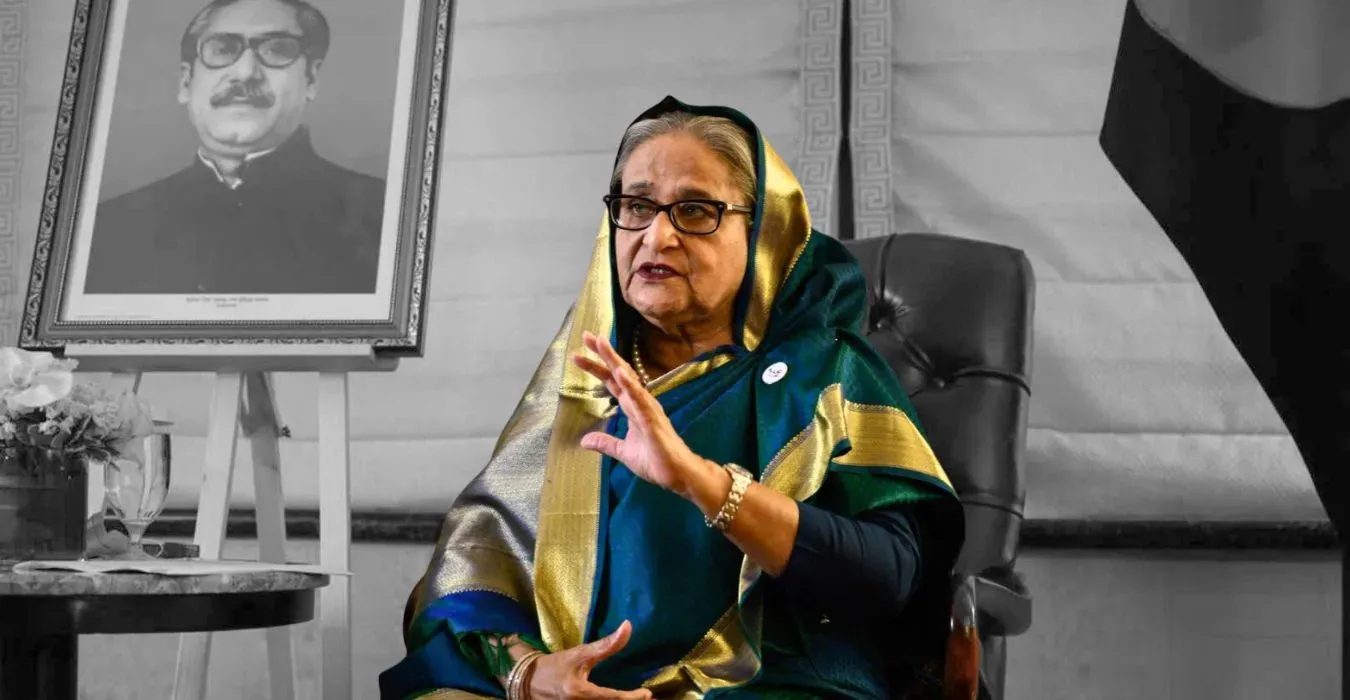
The Strategic Importance of Sheikh Hasina to India
Sheikh Hasina was a pivotal ally for India, steering Bangladesh toward policies that supported Indian interests. Under her leadership, cross-border terrorism was curtailed, trade agreements flourished and longstanding disputes, such as the Land Boundary Agreement, were resolved amicably. Her government also counterbalanced Chinese influence in Bangladesh, aligning the country closer to India. Herouster and the subsequent rise of an interim government led by Nobel laureate Mohammad Yunus, who seeks to “reset” ties with India, have created uncertainties in the bilateral relationship.
Bangladesh’s Extradition Request
Bangladesh’s demand for Hasina’s extradition is rooted in accusations of genocide and crimes against humanity, with trials set to proceed under provisions of its legal system that allow trials in absentia. While India faces international legal obligations under the autdedereau judicare principle (either extradite or prosecute, its extradition treaty with Bangladesh signed in 2013 provides leeway to deny the request if there are concerns of political persecution or humanitarian risks. Given Bangladesh’s history of political retribution and questionable prison conditions, India has valid grounds to safeguard Hasina’s rights under Articles 20 and 21 of its Constitution.
Potential Consequences of Extradition
Extraditing Sheikh Hasina could have significant implications for India on multiple fronts. Firstly, it may destabilise India-Bangladesh relations. By agreeing to extradition, India could be seen as endorsing the interim government in Bangladesh, potentially alienating Hasina’s supporters. This could create a rift between the two nations, as the interim regime has already indicated a less favourable stance toward India compared to Hasina’s leadership.
Secondly, regional security could be impacted. Hasina’s government maintained close ties with India, helping counterbalance the influence of rivals like China and Pakistan in the region. Extraditing her might push Bangladesh’s interim government toward stronger ties with these adversarial powers, disrupting India’s strategic foothold in South Asia. Recent developments, such as Yunus’s meeting with Pakistan’s Prime Minister Shehbaz Sharif in Cairo in Dec.2024 to discuss resolving 1971 issues “once and for all,” signal a warming of ties between Bangladesh and Pakistan, a historically contentious relationship. Additionally, Yunus’s discussions with Chinese Foreign Minister Wang Yi at the United Nations General Assembly (UNGA) in Sept. 2024, which focused on bilateral cooperation and financial support, indicate a potential pivot toward Beijing. These moves suggest that Bangladesh’s interim government is exploring alternatives to its traditional alignment with India.
Thirdly, there could be domestic political repercussions within India. Groups concerned about the rights of Hindus in Bangladesh and Hasina’s historical support for minority protections might criticise the decision, potentially leading to a political backlash against India’s ruling leadership.
Lastly, on the international stage, agreeing to extradition could set a precedent for future asylum cases, complicating India’s position as a regional refuge. Conversely, refusing extradition might invite criticism from the international community for sheltering an individual accused of serious crimes like genocide, thus challenging India’s global image as a law-abiding nation.
India’s Strategic Options
India must balance its legal, humanitarian and geopolitical priorities. One viable approach is to facilitate Hasina’s trial without extradition by allowing her to remain under protective custody in India while participating in the trial via video conferencing. This would uphold her rights and address Bangladesh’s concerns. Diplomatic engagement is crucial and India could propose a joint investigation mechanism to depoliticise the case. Additionally, encouraging Bangladesh to involve the International Criminal Court (ICC) could shift the responsibility to an impartial body, reducing bilateral tensions.
Conclusion
The extradition dilemma underscores the fragility of India-Bangladesh relations and the broader geopolitical stakes involved. While extraditing Sheikh Hasina could momentarily placate Dhaka’s interim government, it risks long-term destabilisation of regional dynamics, undermining India’s interests. Conversely, refusing extradition could strain bilateral ties. India’s response must reflect a balanced approach that safeguards its strategic interests, upholds human rights and ensures regional stability. A collaborative resolution, emphasising justice and mutual respect, is essential to mitigate the fallout and preserve India’s role as a regional leader.
