
Origins and setbacks
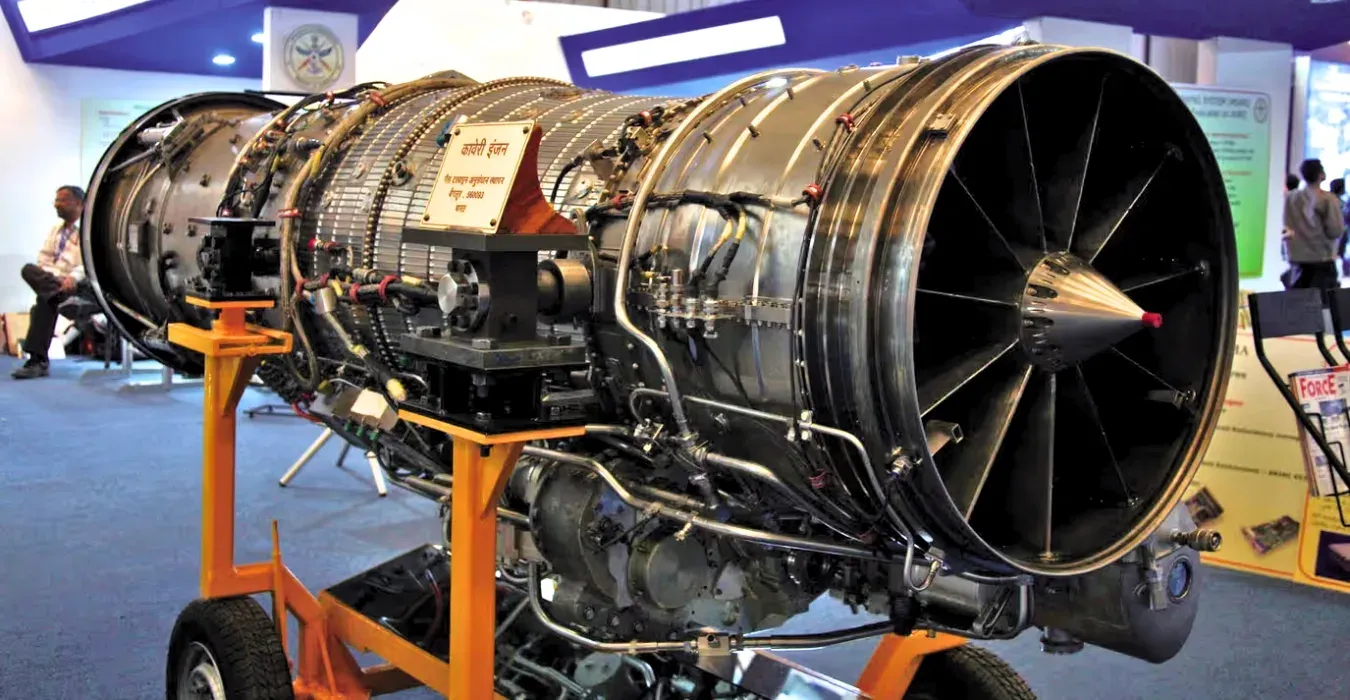
The Kaveri engine program was launched in the late 1980s by the Gas Turbine Research Establishment (GTRE), part of the Defence Research and Development Organisation (DRDO). It aimed to create an afterburning turbofan engine to power India’s homegrown fighter jet, the HAL Tejas.
However, challenges emerged almost immediately. Jet engine development is one of the most complex engineering feats—only a handful of countries, such as the US, Russia, UK, France and China have succeeded in mastering the technology. India faced technological gaps in metallurgy, precision manufacturing and high-temperature material science.
By 2010, the Kaveri engine was delinked from the Tejas fighter program, which instead adopted the American GE F404 engine. Many observers thought the Kaveri had flamed out. However, it survived and technological advancement grew slowly in the domain.
Kaveri’s Revival, Inflight Testing and Approvals
Moving fast-forward to 2025: the Kaveri engine is not just back-it’s progressing with pragmatic goals and renewed direction. The focus has shifted toward modular development, specialized applications and leveraging private sector partnerships.
One of the most pivotal moments occurred in April 2025, when Godrej Aerospace delivered the first two modules of a Kaveri derivative engine to GTRE. This variant is designed as a dry engine, producing around 48 kN of thrust without an afterburner and is tailored for unmanned aerial vehicles (UAVs) such as DRDO’s stealthy Ghatak project. This development marks India’s entry into the elite club of nations capable of building jet engines suited for autonomous combat systems.
A major leap forward is the green light for inflight testing of the Kaveri dry engine aboard a Russian IL-76 testbed. This phase is critical: it transitions the Kaveri from lab benches and static test rigs into real airborne conditions. If successful, this test will validate the engine’s reliability, endurance and adaptability—bringing it one step closer to deployment in operational platforms like India’s upcoming stealth UAVs and cruise missiles.
From Kaveri to Kaveri 2.0: The Next Generation
While the current variant targets UAVs, work is also in progress on Kaveri 2.0 – a burning version that will generate up to 75 kN of thrust with afterburner and potentially 110–120 kN with wet thrust for twin-engine configurations.
This engine is envisioned to power Tejas Mk2, the Twin Engine Deck-Based Fighter (TEDBF) for the Indian Navy and eventually, India’s crown jewel—the Advanced Medium Combat Aircraft (AMCA). For the AMCA, engine development will be crucial for achieving fifth-generation capabilities like super cruise, stealth and deep-strike endurance.
India is exploring foreign collaborations, including technology sharing agreements, to expedite development while retaining control of intellectual property—ensuring true strategic autonomy.

The Fund Kaveri Engine Movement: Public Power Meets Policy
In a surprising twist, the Kaveri engine became a viral sensation in May 2025 when the hashtag #FundKaveriEngine began trending on Indian social media platforms like X (formerly Twitter). Defence enthusiasts, aerospace engineers, veterans and tech-savvy citizens rallied together, calling for increased funding and political attention toward India’s indigenous engine programs.
This movement reflects a deep public realization: sovereignty in defence is not optional-it is essential. When engines come from abroad, so does influence, dependence and compromise.
The people are demanding more than slogans—they want engines.
Strategic Impact: Why Kaveri Matters
1. Reducing Import Dependency
India currently relies on American GE engines and Russian engines for most of its fighter jets, helicopters and transport aircraft. This dependency poses a strategic risk, especially in times of geopolitical friction or sanctions.
2. Boost to Aatmanirbhar Bharat
The successful development of the Kaveri engine aligns with Prime Minister Narendra Modi’s Aatmanirbhar Bharat vision-where India aspires to become not just a buyer of arms but a global hub for defence manufacturing.
3. Export Opportunities
With an indigenous engine, India can offer complete platforms for export without restrictions imposed by foreign engine suppliers. This enhances the attractiveness of Indian jets to friendly nations, especially in Southeast Asia and Africa.
4. Spin-Off Technologies
The Kaveri program has already generated expertise in high-temperature materials, single crystal turbine blades, digital engine controls and additive manufacturing. These technologies have spillover benefits across civilian aviation, space exploration and energy sectors.
Challenges Ahead: A Candid Assessment
Despite the momentum, some challenges remain.
- The afterburning version of the engine must pass rigorous tests and meet thrust-to-weight benchmarks.
- India must scale up its aerospace materials ecosystem, particularly in producing nickel-based superalloys and ceramic matrix composites.
- Funding continuity is critical. Engine development is capital-intensive and requires sustained political and financial commitment.
- Talent retention in aerospace engineering and research must be prioritized.
But none of these challenges are insurmountable. They are hurdles on a runway, not roadblocks.
Private Industry’s Role: A Quiet Revolution
Companies like Godrej Aerospace, Larsen & Turbo, Bharat Forge, and Tata Advanced Systems are no longer just vendors-they’re design and development partners. Their involvement has introduced precision manufacturing, international quality standards, and modular integration into India’s defence R&D landscape.
As India moves from DRDO-led to ecosystem-led defence production, the Kaveri engine becomes a test case for what this new model can achieve.
The Sky Is Not the Limit
In a world where air superiority defines geopolitical strength, engine autonomy is the ultimate currency. And India is minting its own. The road to indigenous jet engine development is long and unforgiving. But as the Kaveri gains altitude—literally and metaphorically—it reflects something deeper: a nation’s refusal to be defined by technological dependence.
The Kaveri engine, once dismissed as a failed experiment, is rising from the ashes. It is no longer just about powering aircraft-it is about powering ambition, innovation, and sovereignty. It is the heart of steel and fire that beats inside the future of India’s skies.
