
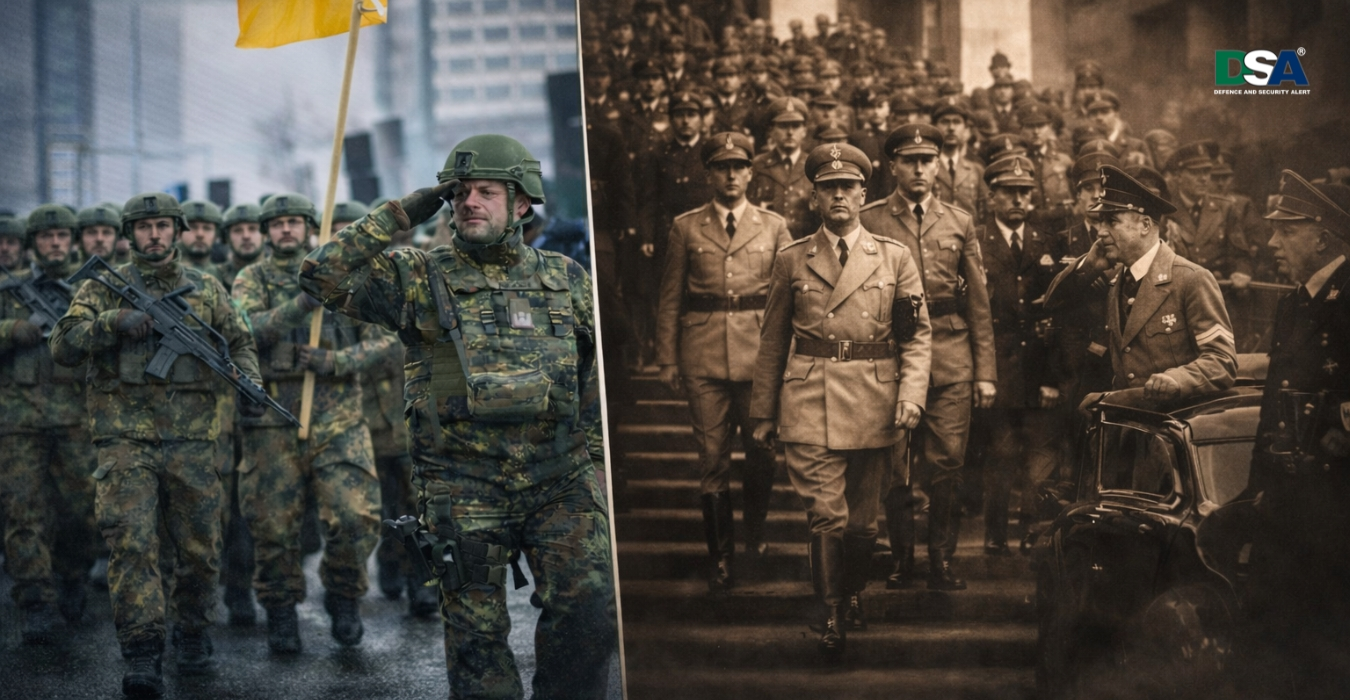
Germany’s latest military reforms have triggered a global debate that goes far beyond policy details. The Military Service Modernisation Act, introduced in 2026, brought back the framework of conscription and briefly created controversy over rules requiring men under 45 to seek approval for extended stays abroad. Although Defence Minister Boris Pistorius clarified that such restrictions are suspended during peacetime, the episode exposed a deeper tension within German society how far can the country go in strengthening its military without reviving historical anxieties. What appears as a technical adjustment is, in reality, part of a much larger strategic shift toward preparedness.
The Ukraine War Changed Everything
The turning point for Germany came with the Russian invasion of Ukraine, which shattered Europe’s long-standing assumptions about peace and stability. For decades, Germany relied on diplomacy, economic strength, and alliances like NATO to ensure its security. That model is now under strain. Berlin has recognised that economic influence alone cannot deter modern threats, forcing a structural rethink of defence policy.
Youth at the Core of Defence Strategy
At the heart of this transformation lies a renewed focus on youth. Under the 2026 framework, all 18-year-old men are required to respond to a military questionnaire assessing willingness to serve, while women may participate voluntarily. From 2027, medical fitness assessments will become mandatory to build a ready reserve pool. Although conscription remains suspended, it can be reactivated if voluntary recruitment falls short. Initially, rules linked men aged 17–45 to reporting long stays abroad, but these have been suspended in peacetime. This reflects a “latent conscription” model Germany is not forcing service but quietly preparing for rapid mobilisation if required.
Ambition for Europe’s Strongest Army
Chancellor Friedrich Merz has set a clear strategic goal: to build Europe’s strongest conventional army. Germany’s defence budget has now risen to approximately €90–100 billion annually, crossing NATO’s 2% GDP benchmark, supported by a €100 billion special defence fund launched in 2022. The Bundeswehr currently fields around 181,000 active troops, with plans to expand to over 203,000 by 2030, supported by reserves of roughly 60,000–80,000 personnel. This expansion is not symbolic it is a structural shift aimed at restoring military credibility.
Military Modernisation and Capability Expansion
Germany’s transformation is also visible in its hardware and operational posture. The Bundeswehr operates over 300 Leopard 2 tanks and has procured 35 F-35 fighter jets to strengthen nuclear-sharing commitments within NATO. Advanced air defence systems like IRIS-T are being expanded, reflecting lessons from modern warfare. Germany is also taking on a more active NATO role, including leading deployments on the alliance’s eastern flank, particularly in Lithuania. These developments indicate a shift from minimal capability to operational readiness in high-intensity conflict scenarios.
Is This a Return to Hitler-Era Militarism?
The shadow of Adolf Hitler inevitably shapes perceptions of German military expansion. However, comparisons with Nazi-era militarism are fundamentally misplaced. At its peak during World War II, Germany mobilised over 13 million personnel in a system driven by expansionist ideology and authoritarian control. In contrast, modern Germany operates under a deeply entrenched democratic framework where military deployments require parliamentary approval. The Bundeswehr is integrated into multilateral systems and is structured for defence, deterrence, and alliance commitments not conquest. Historical memory continues to act as a powerful restraint against any form of aggressive militarism.
The Rise of Far-Right Politics: A Real Concern?
The growing support for the Alternative for Germany has added complexity to the debate. The party is currently polling between 18–25%, with particularly strong support in eastern regions. While this reflects public concerns over migration, economic pressures, and national identity, it does not indicate a return to Nazi-style governance. AfD operates within democratic institutions and remains under scrutiny by German authorities. Its rise signals political tension, not a militaristic transformation of the state.
From Economic Giant to Strategic Power
Germany’s evolution is best understood as a transition from an economic powerhouse to a strategic security actor. For decades, Berlin was criticised for underinvesting in defence while benefiting from the stability provided by others. That phase is ending. Germany is now investing in cyber capabilities, air defence, logistics, and rapid mobilisation systems, while also pushing for greater European strategic autonomy. This is not about dominance, but about credibility in a rapidly changing security environment.
Conclusion: A Necessary Transformation, Not a Dangerous Return
Germany today is not seeking to recreate its past but to secure its future. Its military reforms represent a controlled and democratic response to new geopolitical realities rather than a revival of historical ambitions. The country is moving from a culture of restraint to one of responsibility, recognising that security in Europe can no longer be taken for granted. The real question is no longer whether Germany wants to become powerful again. But whether Europe can remain secure if it does not.
