
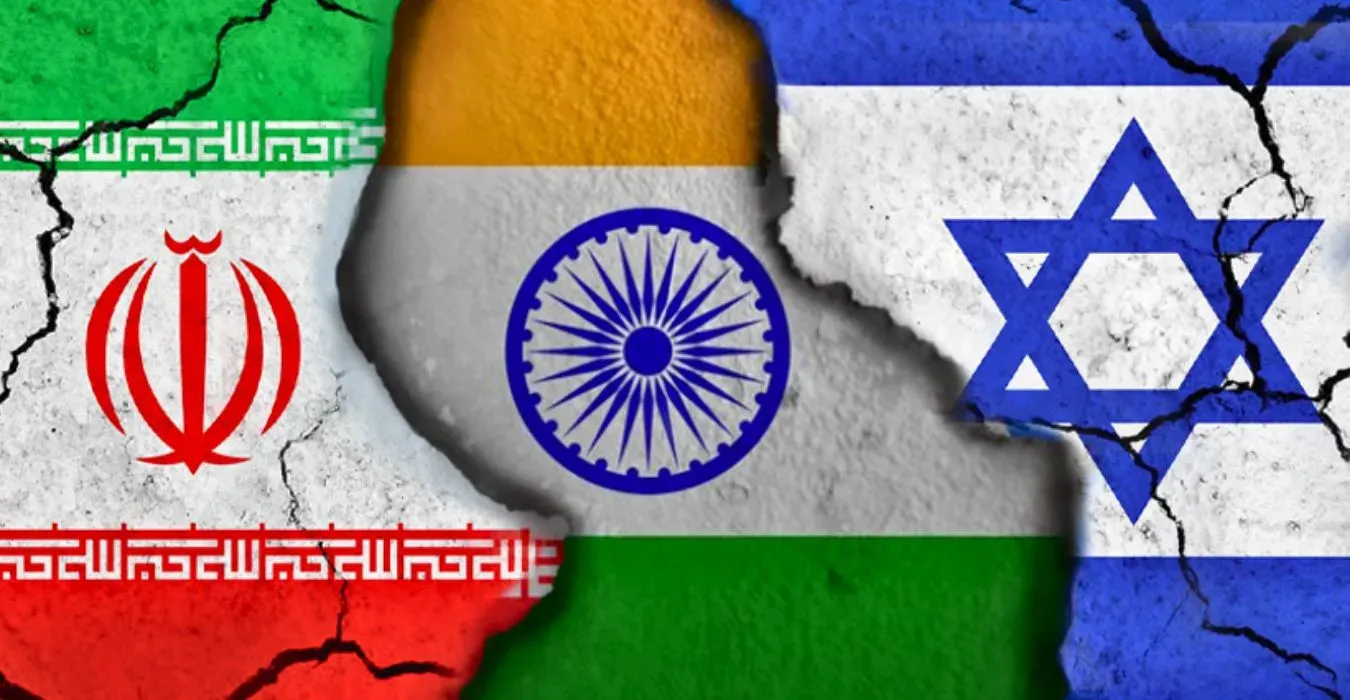
A Delicate Balance
India’s foreign policy has traditionally focused on non-alignment and strategic autonomy and now faces tension between two major forces in the Middle East — Iran and Israel. The growing competition between these two countries, especially over the last few years, has left India stuck between a rock and a hard place in diplomatic terms. India’s ties with Israel and Iran represent two separate strands of its Middle Eastern diplomacy. India shares close relations with Iran primarily due to energy needs, regional stability and historical connections from the ancient Silk Road. Iran is one of the top suppliers of crude oil to India and New Delhi has invested heavily in its strategic partnership with Tehran, particularly in terms of energy security. Iran’s geopolitical significance also dovetails with India’s interests in Afghanistan, where both countries have common concerns about terrorism and instability.
Though relatively recent, India’s ties with Israel have grown into a strong partnership, especially in defence and technology, in a short period. India now buys more defence equipment from Israel than any other country — including advanced air defence systems, drones and missile technology. Cybersecurity, counter-terrorism and intelligence sharing are among the growing areas of cooperation that have cemented Indo-Israeli ties. Given Israel’s technological excellence and India’s strategic focus on the Indo-Pacific and the broader Middle East, the two nations have gradually converged across multiple realms.
But they have been complicated by an intensifying rivalry between Iran and Israel. Iran’s backing of proxies, such as Hezbollah in Lebanon and Hamas in Gaza and its nuclear ambitions place it squarely at odds with Israel, which sees Tehran’s grip on power in the region as a significant existential threat. This rivalry creates a prickly diplomatic challenge for India, which has long had close relations with both countries.
Energy Security vs. Strategic Partnership
Energy security is among India’s most important areas of interest to ensure strong ties with Iran. India is the world’s third-largest crude oil importer and Iran has long been one of its leading suppliers. India, for its part, has been treading a fine line, concerned both about U.S. efforts to isolate Iran through sanctions and its own need for Iranian energy. One more Indian strategic endeavour to stare at Central Asia through the Pakistani prism is the development of the Iran (Chabahar) Port, financed by India. This scheme has broader implications for India’s regional connectivity and trade corridors.
In contrast, defence technology cooperation with Israel is central to India’s security strategy. Israel sells advanced defence systems to India, which are essential in India’s fight against terrorism, particularly in Kashmir. Air defence cooperation includes missile defence design and development, intelligence sharing and operational cooperation, including counter-terrorism operations. It has made Israel an indispensable ally in the region, mainly to modernise not just the Indian economy but also its armed forces.
This intersection of conflicting preoccupations — energy security and defence cooperation — promises to present India with a challenge in terms of a balancing act. As Iran and Israel persist with their confrontational postures, India must search for a way to safeguard its energy interests in Iran even as it deepens its defence relationships with Israel. More so in a geopolitical landscape in which tensions are high, particularly the rising U.S. pressure on Iran and Israel alike to consolidate their interests.
Strategic Implications for India’s Middle East Policy
India’s Middle East policy has always sought strategic autonomy and neutrality in regional conflicts. The Iran-Israel rivalry adds complications to this approach. India has been careful not to pick a side, focusing on pragmatic engagement with each country. India, for example, has consistently called for a peaceful solution to the Israel-Palestine conflict and tried to maintain a traditional position in favour of Palestinian statehood while also building up a firm relationship with Israel. For instance, India has had robust economic and political ties with Iran, particularly in the trade, energy and infrastructure sectors.
Escalating instability in the Middle East, driven by Iranian-Israeli rivalry, poses a wide range of risks for India. The biggest concern is the spillover of conflict into adjacent regions, especially Afghanistan, where Iranian and Pakistani interests run parallel. India has a high stake in Afghanistan: It has invested in its infrastructure, security and development, hoping to secure its strategic foothold in Central Asia. Any further escalation of tensions between Iran and Israel would destabilise the region and further undermine India’s broader geopolitical objectives.
The relationship between India and the Gulf Cooperation Council (GCC) countries, particularly Saudi Arabia and the United Arab Emirates (UAE), also plays a role. That means these Gulf Arab nations are part of the region’s anti-Iran bloc. India’s diplomatic balancing act with Iran must be calibrated carefully to not strain relations with its Gulf partners. With India strengthening its ties with Israel, especially in the fields of defence and technology, it must also make sure that it does not alienate the Arab world, which is crucial for Indian energy imports and economic cooperation.
India’s Role as a Mediator
India should mediate the ongoing tensions and it can do so with its neutral slavery and strategic ties with both Iran and Israel. India’s expanding multilateral footprints on the global stage, including in institutions like the United Nations and the Shanghai Cooperation Organisation (SCO), enable it to act as a bridge between the two countries. However, India’s capacity to mediate is hampered by decades-old mistrust between Iran and Israel and the regional interests of other great powers, including the United States and Russia.
India can, however, call for peace, stability and a negotiated settlement to regional conflicts. By utilising its diplomatic capital, India can prevent the Middle East from becoming a theatre for proxy wars that could further destabilise the region. India needs to strike a fine balance between dialogue, energy security and strong defence ties with Israel while promoting peace over the Middle East and the Iranian nuclear issue.
Conclusion
India’s tightrope walks of managing its relations with rivals Iran and Israel would constitute a diplomatic challenge of sorts. As it navigates this treacherous terrain, India must secure its energy security, defence interests and the region’s stability. The reality of diplomacy in the volatile Middle East, understands Moore, is illuminated through India’s engagement with Iran and Israel, with the one in focus here stressing a pragmatist, balanced foreign policy prioritising long-term strategic goals over short-term prospects. India’s potential role as a mediator could be essential in efforts to lessen tensions. Still, it must proceed delicately and cautiously to avoid alienating key partners. Ultimately, India’s navigation of the Iran- Israel rivalry will ineradicably shape its Middle East policy in the years ahead.
