
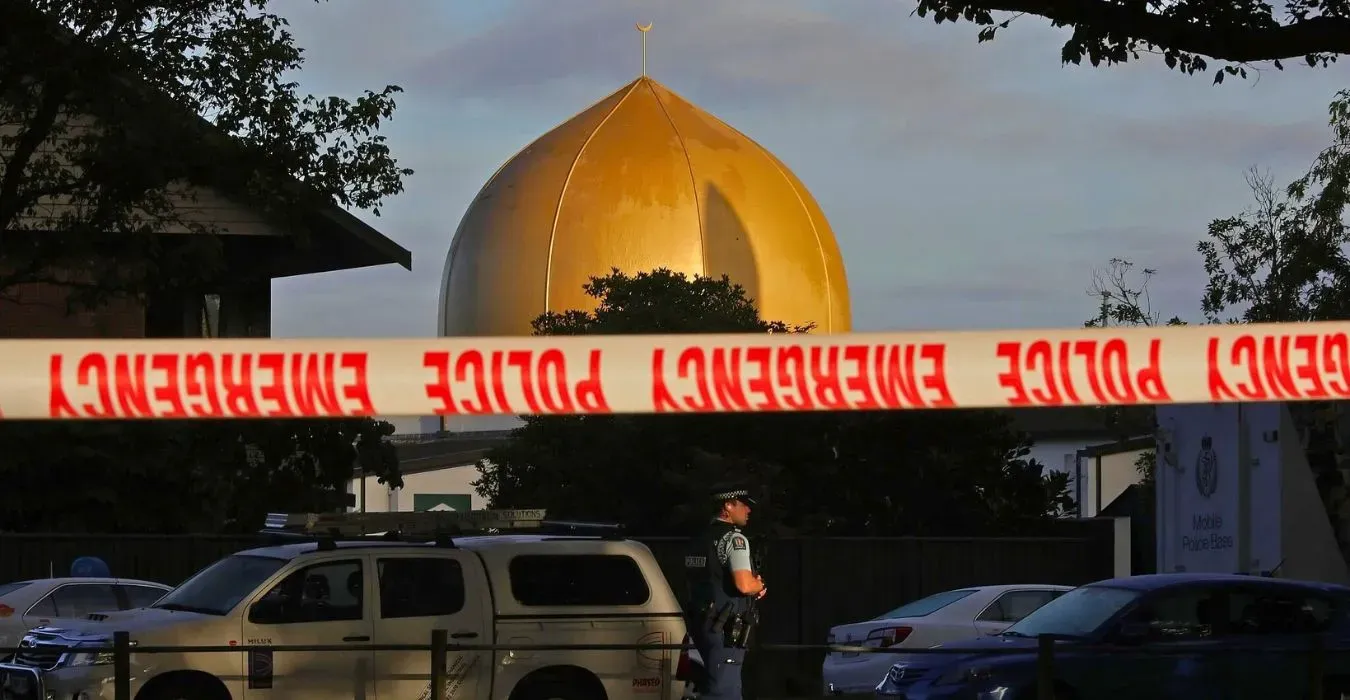
Indeed, on March 15, 2019, the most terrible live stream of a brutal massacre of Muslim devotees anywhere on earth left the world nauseated. The remorseless extremist not only poured out his radical inner-thoughts through violence, but also wrote a 74-page manifesto titled “The Great Replacement.” New Zealand’s Royal Commission of Inquiry, which investigated the Christchurch terror attack, was convinced that the attacker believed in extremism as a method to counter the perceived existential threat faced by the Western society from Muslim migrants. It proved beyond doubt that this lone-wolf attack on Mosques in New Zealand was part of a larger design to spread hate across the globe in a calibrated manner.
Clearly, what humanity witnessed in Christchurch was not any isolated incident, but a dangerous psychological act unleashed to further polarise societies and set the snare for trapping potential terror recruits. But for the then New Zealand Prime Minister Jacinda Ardern, the outcome of such a grisly crime could have been a chain of global retribution, equally horrific. Ardern’s prompt intervention halted, at least temporarily, the process of breathing life into another Frankenstein which was taking shape stealthily. She conveyed to this journalist her resolve to stand by the Muslim community through thick and thin and strictly confront the spread of toxic ideology, when the whole world was unable to hide the astonishment of watching a peaceful and egalitarian New Zealand – far removed from the epidemic of hatred – enduring such carnage. It seemed, the eastern hemisphere’s far eastern periphery was witnessing churn like never before, with ISIS-inspired terror and rabid Islamophobia taking deep root simultaneously, as they complement each other effectively.
Christchurch Attack
A few days before the Christchurch carnage, when Alexander Macario, Assistant Secretary for Peace and Security, of Philippines’ Department of Interior and Local Government, citing ground intelligence inputs, revealed to this journalist that one among the country’s four most dreaded extremists, namely Hatib Sawadjaan, FurujiIndama, Abu Turaifie and the reportedly eliminated Abu Dar, was expected to be crowned as ISIS’s new Southeast Asia Emir. He was echoing the concern of a region where half of the countries experienced armed rebellion since decades notwithstanding the region’s harmonious adaptation of cultural diversities.
Undoubtedly, the global landscape of terrorism has undergone a profound shift. ISIS may be defeated, but they were able to spread a vicious doctrine far and wide. Starting out as a splinter group of Al-Qaeda, ISIS, one must not forget, emerged as a structured militant outfit adept at information and asymmetric warfare and had successfully globalised a decentralised model of self-sponsored and propagating extremism, hitherto attempted by any other designated extremist group. It is in this context that ISIS’s successful enlisting of educated individuals, sans criminal record has worrying implications for Southeast Asia and the world. Add to it, the unique methodology introduced in Indonesia, of turning an entire family into a sadistic terror module, which gave a whole new dimension to ISIS modus operandi. ISIS’s indoctrinated human assets, dispersed across the globe to respective countries, will likely become the fulcrum of a new localised terror-alliance in the future, as they impart ideological lessons and real-life operational experiences to home-grown, next-generation radicals. And, a cocktail of religious conservatism and majoritarian supremacism can make the Far East and Oceania a new theatre for expansionist design and breeding ground of a new genre of extremism. Since, the global trend of radically theologising and politicising distorted versions of religion, subscribed to and proliferated by terrorist organisations, remains unchallenged. Adequately vulnerable individuals will be targeted, groomed and used to commit despicable atrocities. These are times when cyberspace is awash with motivational materials to lure prey.
Conclusion
Though de-radicalisation efforts in the Far East have yielded little results as it lacked depth and wider acceptability, a holistic counter-radicalisation model of making community elders and religious leaders, at the grassroots, the plinth of identifying and countering penetration of terror ideology can work wonders. Apart from productive social discourse, involving a wide-spectrum of stakeholders, to spread awareness, southeast asian nations must devise effective strategies to track and intercept potential recruitment within and outside the region. Besides, keeping a fine balance between enhanced counter-terrorism measures and civil liberty is an essential prerequisite for lasting peace.
Above all, radical supremacism and Islamophobic fascism bolsters entrenchment of Islamic radicalism. A political consensus on limiting majoritarian rhetoric can keep the extended Far East free from violence. One must not forget that methodical extremism has its root beyond poverty, discrimination and disgruntlement. According to the Philippines Army’s former chief of operations, retired Major General Carlos Holganza, violent extremism can be dissipated through a collective effort from the various government agencies focusing on social and educational reforms. As long as social programs of the government are not being felt by marginalised communities, recruitment by terrorist groups will continue due to lack of opportunities. As for the ideological aspect, the government should empower its partnership with religious organisations to prevent proliferation of radicalised ideology.
