
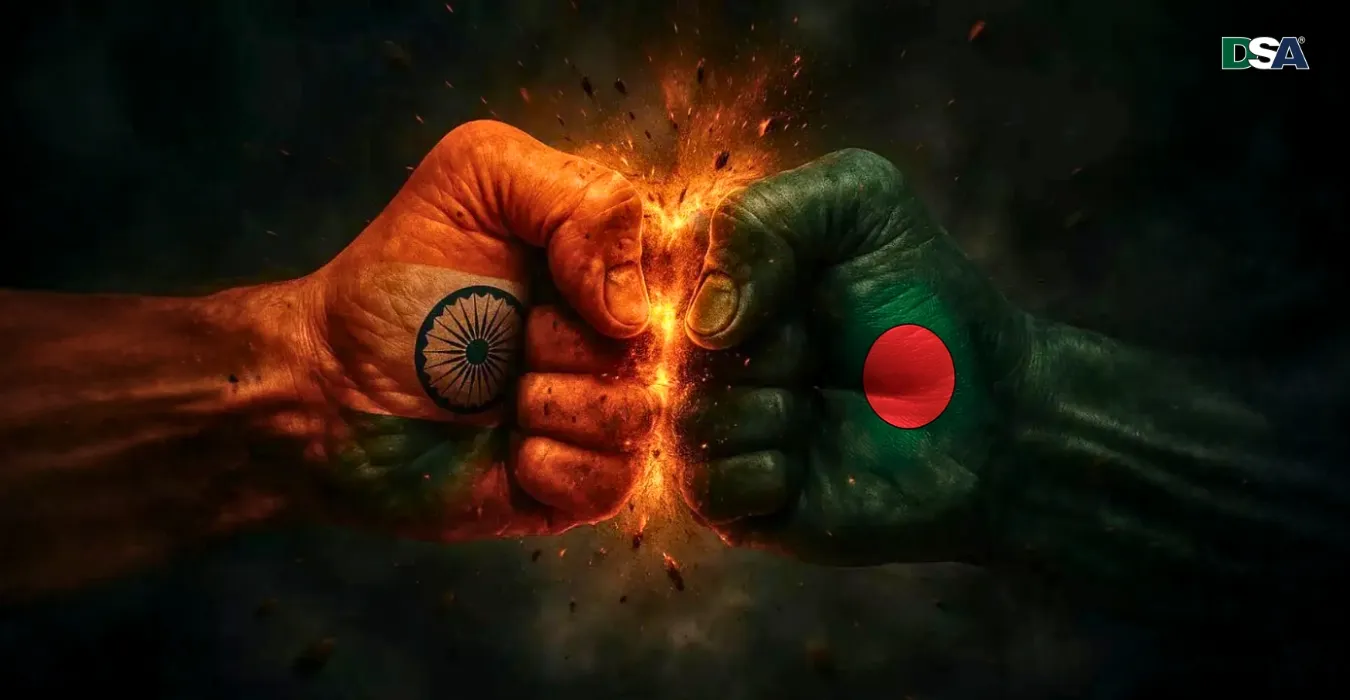
Political Transition in Bangladesh and Its Impacts on Bilateral Relations
The political landscape in Bangladesh underwent a significant transformation with the establishment of the Yunus-led interim government in August 2024. This shift has strained India-Bangladesh ties, primarily due to Dhaka’s demands for the extradition of former Prime Minister Sheikh Hasina, who is currently harboured by India. Yunus’s government has also released several Islamic extremists from prison, raising concerns in New Delhi about the resurgence of terrorism in the region. Indian Prime Minister Narendra Modi has highlighted the need to protect the Hindu minority in Bangladesh, who have reportedly faced communal attacks. However, Dhaka accuses India of exaggerating these incidents, deepening the mistrust between the two nations.
The arrest of Hindu monk Chinmoy Krishna Das on charges of sedition further escalated tensions, resulting in communal riots and diplomatic protests. The strained ties culminated in Indian Foreign Secretary Vikram Misri’s visit to Dhaka to address the growing friction. While efforts to resolve the differences are ongoing, the success of these diplomatic engagements remains uncertain.
China’s Expanding Footprint in Bangladesh
China has emerged as a major player in Bangladesh’s economic and political sphere, leveraging its Belt and Road Initiative (BRI) to deepen ties. The development of critical infrastructure projects, including the Chittagong, Mongla and Sonadia ports, has placed Beijing in a strategic position to enhance its maritime presence in the Bay of Bengal. These investments also align with China’s “string of pearls” strategy, aimed at encircling India within the Indian Ocean region.
Beijing’s strategic engagement extends beyond infrastructure. The Chinese government has established relationships across Bangladesh’s political spectrum, including with the opposition Bangladesh Nationalist Party (BNP) and Jamaat-e-Islami, an Islamist group. This approach contrasts sharply with India’s selective engagement, highlighting a diplomatic advantage for Beijing. In the defence sector, Bangladesh is now the second-largest importer of Chinese weapons. As Dhaka increasingly views New Delhi as a potential adversary, China could further solidify its security ties, thereby encircling India on both its western and eastern flanks.
The Revival of Bangladesh-Pakistan Relations
For the first time in decades, Pakistan has made significant inroads into Bangladesh. This revival of ties includes Pakistan providing ammunition to Bangladeshi security forces and a historic docking of a Pakistani cargo ship at Chittagong port. Moreover, Bangladesh has waived customs inspections for Pakistani imports and eased visa requirements for Pakistani citizens, signaling a thaw in relations. These developments are particularly concerning for India due to their potential to create a renewed West Pakistan-East Pakistan axis. Shared Islamist affiliations and mutual antipathy toward India further strengthened the foundation of this relationship. The growing alignment between Bangladesh and Pakistan, backed by China, complicates India’s security calculus in South Asia.
Implications for India and the Indo-Pacific Region
The deteriorating relationship between India and Bangladesh has profound implications for regional stability. A closer alignment of Dhaka with Beijing and Islamabad threatens to encircle India strategically, creating new challenges on its eastern flank. The potential for Bangladesh to become a hub for Islamic extremism adds another layer of security concerns. For the United States, the developments in Bangladesh present challenges to its Indo-Pacific strategy. Escalating tensions between India and Bangladesh could detract Washington’s attention from critical areas like the Taiwan Strait, the South China Sea and the Korean Peninsula. Moreover, China’s expanding influence in the Bay of Bengal could undermine the US objective of maintaining a “free and open Indo-Pacific.”
Pathways for India to Recalibrate Its Strategy
To address these challenges, India must adopt a multifaceted approach to rebuilding trust with Bangladesh. Engaging more inclusively with Dhaka’s political actors, including opposition parties, could help counterbalance China’s influence. Transparency in economic agreements and competitive bidding processes can restore Bangladesh’s confidence in Indian investments, particularly as Dhaka reviews its agreements from the Sheikh Hasina era. Strengthening security cooperation with Bangladesh on counter-terrorism and maritime security can serve as a foundation for rebuilding strategic ties. Additionally, leveraging partnerships with the United States and other Quad nations can offer viable alternatives to Chinese investments, ensuring that India’s influence remains significant in Dhaka.
Conclusion
The evolving dynamics in India-Bangladesh relations underscore the urgency for a recalibrated foreign policy approach by New Delhi. Failure to stabilise relations could lead to significant strategic disadvantages, allowing China and Pakistan to deepen their foothold in South Asia. However, with a concerted effort to rebuild trust, India has the opportunity to counter these challenges and ensure long-term stability in the region. By addressing the concerns of the interim government and fostering inclusive engagement, India can safeguard its interests and maintain its role as a key player in South Asia.
