
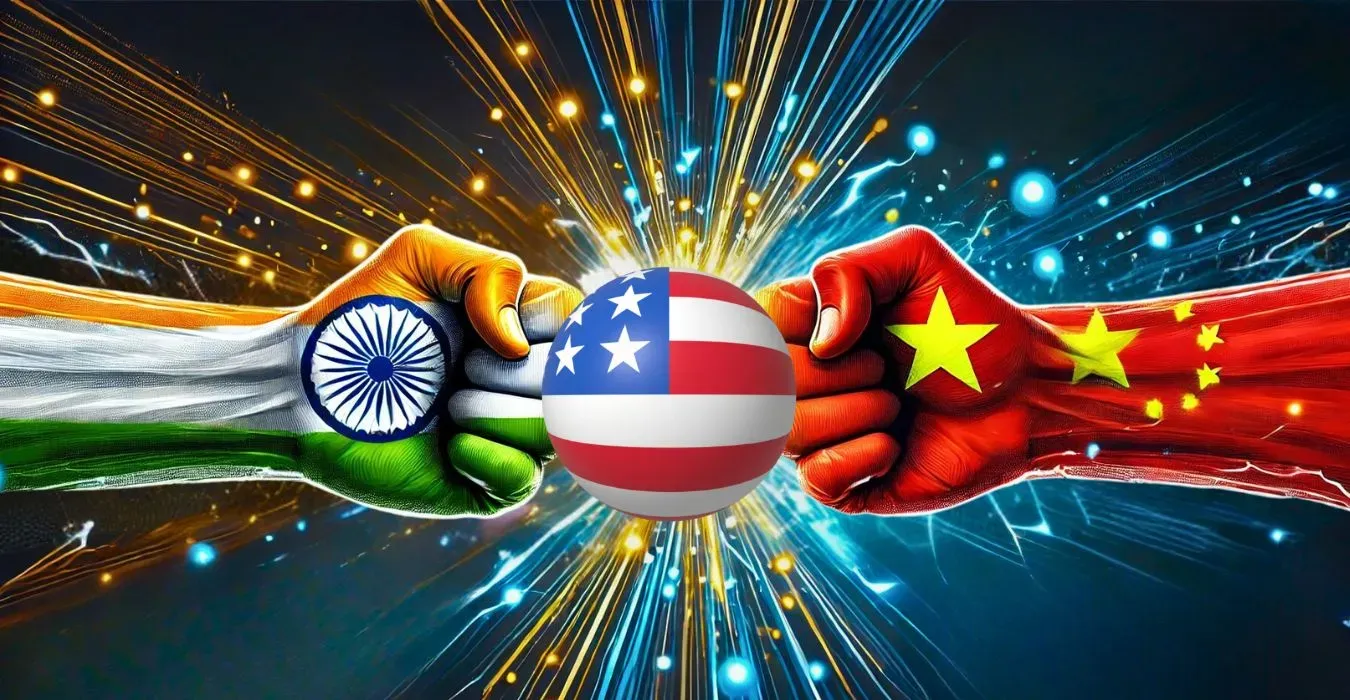
That Trump is serious about tariff retaliation against strategic partners too and fully invested in seeing his plan through is reflected in declaring Indian Prime Minister Narendra Modi as “a great friend” but considered India – a “Tariff King.” President Trump cited Harley Davidson’s inability to sell motorbikes in India because of high taxes to justify his “eye for an eye” tariff war. In fact, the Harley Davidson case was a classic example of how India put conditions to secure trade deals. Harley Davidson motorbikes did not meet India’s emission standards and were therefore blacklisted. Sometime in 2007-2008 when India faced stiff resistance in exporting Mangoes to the US, a friend of President George Bush was pitching for sale of Harley Davidson motorcycles in India’s lucrative market.
According to a former bureaucrat who served in the Commerce Ministry, New Delhi utilised that opportunity to relax norms in favour of Harley Davidson as a quid pro quo for Washington allowing import of Indian Mangoes. Prime Minister Modi followed that line of strategic aggression while negotiating with President Trump recently, prompting the US President to describe him as a “tougher, much better negotiator.”
EFFECT OF US TARIFF WAR ON SINO-INDIA TIE
Ironically, President Trump’s reciprocal tariff war may eventually benefit China – a country top on his administration’s priority list for strategic containment. China’s relation with India entered a downward spiral in the wake of the 2020 Galwan conflict. Not only did China and India deploy thousands of soldiers on the border, tension spilled over to other areas too, with both sides resorting to tit-for-tat action against each other. India drifted toward the US following this clash, signing the Basic Exchange and Cooperation Agreement on Geospatial Cooperation a pact that ensured seamless interoperability between the US and Indian militaries.
In 2022, US’ National Defence Strategy and Indo-Pacific Strategy further reinforced Washington’s steadfast support toward India vis-à-vis any Chinese misadventure on the border and in the broader Indian Ocean region. The US did share actionable intelligence with India that prevented another fatal clash the same year. But if President Trump pushes India to the wall, both the Indian and Chinese leadership might prefer reconciliation over detrimental rivalry – without abandoning respective values, principles and strategic interests.
Moreover, the large share of Chinese components in Indian manufacturing makes India vulnerable to American protectionist measures, which will render Indian exports less competitive in the US market. The fact is, apart from revoking India’s preferential trade treatment in 2019, President Trump’s first administration’s steel and aluminium tariff affected US-India trade badly. Therefore, a stable relationship with China allows India the much-needed elbow room for strengthening multipolarism. China and India can benefit from each other’s markets to mitigate the impact of potentially bigger import tariffs imposed by the US in the days ahead. Even the Chief Economic Adviser to the Indian government, V Anantha Nageswaran, backed more Chinese direct investment in the annual economic survey for boosting India’s exports to the US and other Western countries, which will also enable India to keep her burgeoning trade deficit with Beijing under tight leash.
WINDS OF CHANGE IN SINO-INDIAN RELATIONS
Despite sharing a disputed border in the Himalayas that has served as a source of tension since the 1960s, both China and India have recognised the need for laying down the foundation for normalisation in an otherwise tense relationship. The complementary strengths and vast opportunities for collaboration across diverse sectors has generated new optimism of tackling pressing regional issues jointly. China has emerged as the largest trading partner of India in the fiscal year 2023-24. Bilateral trade stood at $118.4 billion and India’s exports to China went up by 8.7 percent year-on-year, according to economic think tank Global Trade Research Initiative.
President Trump’s proclivity to use tariff wars for resolving trade disputes may unite America’s trading partners unintentionally in pushing back his trade policies. “India and China are large emerging economies with a growing middle class. It is a great opportunity for the two neighbours to tap into each other’s huge market now, not only as a result of improving bilateral relations, but also as a strategy to offset any negative impact of President Trump’s protectionist policy” – says eminent political scientist Professor Zhiqun Zhu of Bucknell University.
While discussing the probable trajectory of Sino-Indian relations in the Trump 2.0 era, Professor Zhu expressed his optimism that the two Asian giant’s relations will become more resilient as they navigate the turbulent world together. “Not all problems between them will disappear overnight, including the longstanding border dispute. But India and China are more pragmatic now and have learned to focus on areas they can cooperate smoothly. With a long history of interacting with and learning from each other for thousands of years, China and India are well prepared to manage their relations and handle future challenges,” Professor Zhu opined.
