
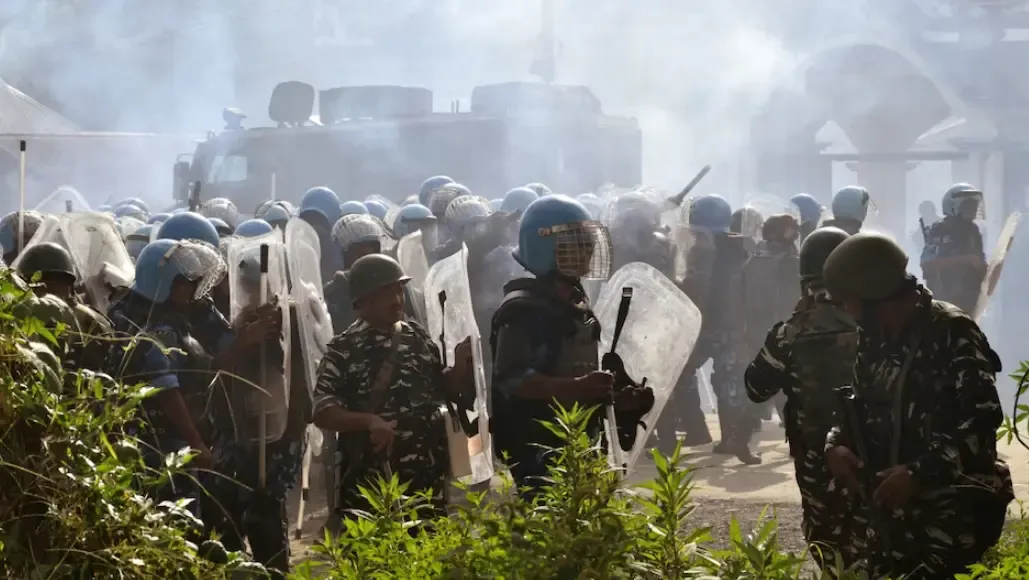
Manipur, a strategic state nestled in the northeastern frontier of India, has long been a mosaic of diverse ethnic communities. Among these, the Kuki and Meitei tribes represent significant demographics whose historical and socio-political dynamics have increasingly become focal points of contention. The escalating ethnic conflict between the Kuki and Meitei communities not only threatens the fragile peace within Manipur but also poses broader implications for Bharat’s (India’s) national security.
Historically, Manipur has been a melting pot of various tribes and cultures, with the Meiteis predominantly inhabiting the Imphal Valley and the Kukis residing mainly in the surrounding hills. The Meiteis, being the majority in the valley, have traditionally held political and economic dominance, which has often led to feelings of marginalisation among the Kuki population. This disparity has been a root cause of tensions, occasionally erupting into violence and insurgency. The demand for greater autonomy and recognition of tribal rights by the Kukis has been met with resistance, further deepening the chasm between the communities.
In recent years, the situation in Manipur has been exacerbated by several factors. The proliferation of militant groups, some of which are aligned along ethnic lines, has intensified the conflict. These groups exploit local grievances to gain support, perpetuating cycles of violence and retaliation. Additionally, socio-economic disparities, lack of adequate infrastructure and limited access to education and healthcare in certain regions have fueled discontent, making communities more susceptible to radicalisation. The influx of external influences and the strategic interests of neighbouring countries in the region have also played a role in complicating the conflict dynamics.
Manipur
The implications of the Kuki-Meitei conflict extend beyond Manipur’s borders, posing significant challenges to India’s national security framework. Manipur’s geographical location serves as a critical corridor connecting the northeastern states to the rest of India and neighbouring countries like Myanmar. Persistent instability can disrupt vital supply chains, hinder economic development and provide a breeding ground for cross-border insurgency and trafficking. Moreover, the prolonged conflict diverts substantial government resources and attention from other pressing national security concerns, potentially weakening India’s overall defence posture.
Addressing the ethnic conflict in Manipur requires a multifaceted approach that balances immediate security needs with long-term socio-political solutions. The Indian government has initiated several measures, including peace talks, development projects and attempts to ensure fair political representation for marginalised communities. Strengthening local governance, promoting inclusive economic growth and investing in education and infrastructure are crucial for mitigating the underlying causes of the conflict. Additionally, fostering dialogue and reconciliation between the Kuki and Meitei communities can pave the way for sustainable peace.
In conclusion
The ethnic strife between the Kuki and Meitei tribes in Manipur presents a complex challenge to Bharat’s national security. While the state remains a vital strategic asset, ensuring its stability is paramount for India’s broader security and prosperity. A concerted effort that integrates security measures with socio-economic development and political inclusivity is essential to resolve the conflict and secure a peaceful future for Manipur and the nation at large.
