
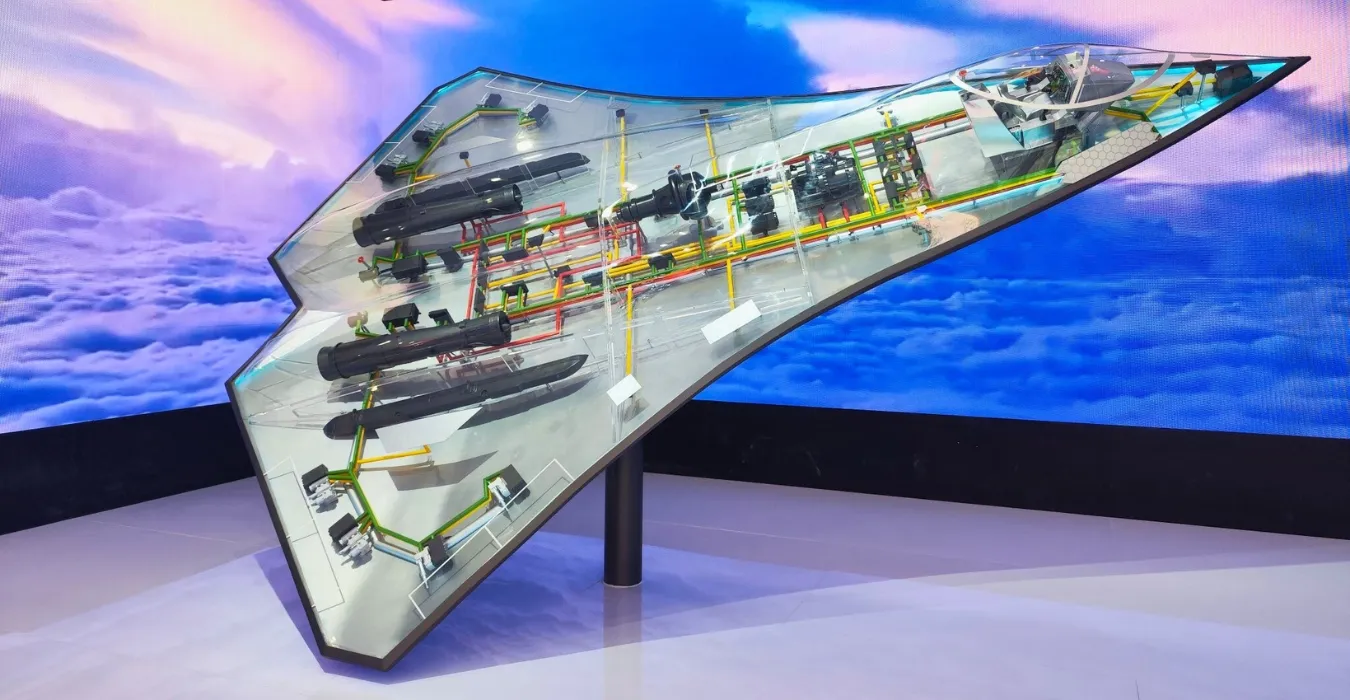
The global battlefield is evolving and airpower plays an increasingly critical role in shaping military strategies. Recent advancements in stealth technology and next-generation aircraft are at the forefront of this transformation. China’s unveiling of two sixth-generation stealth aircraft prototypes underscores its determination to redefine the future of air combat. These aircraft, developed by Chengdu Aircraft Corporation (CAC) and Shenyang Aircraft Corporation (SAC), incorporate advanced features such as tailless designs, enhanced stealth capabilities and next-generation flight technologies (Newdick & Rogoway, 2024). By employing innovative engineering, China seeks to challenge traditional airpower dominators like the United States, as highlighted in recent reports from the U.S. Department of Defense (2024).
Technological Features and Innovations
The Chengdu design represents a heavy stealth aircraft featuring a diamond-delta wing configuration and a tri-engine setup. This layout prioritises extended range, substantial payload capacity, and enhanced stealth, making it suitable for long-range missions in contested environments (Wang & Li, 2024). Its robust twin-wheel landing gear reflects its ability to operate under high-stress conditions, aligning with its potential role as a regional bomber or heavy multi-role fighter. In contrast, the Shenyang prototype adopts a sleeker, twin-engine configuration with a lambda wing design, which enhances its aerodynamic efficiency and stealth (Rupprecht, 2024). Diverterles Supersonic Inlets (DSI) further minimise radar signatures, positioning the aircraft as an agile and cost-effective tactical alternative.
Both designs employ tailless configurations, significantly reducing radar observability while improving fuel efficiency and internal storage for weapons (Jane’s Defence Weekly, 2024). However, such designs require advanced digital flight controls and potentially thrust-vectoring engines to address stability challenges. These technological features underscore the innovation driving China’s efforts to create aircraft that excel in stealth, agility and operational endurance.
Strategic Implications
China’s unveiling of these prototypes highlights its ambition to dominate air combat technology. The complementary nature of the Chengdu and Shenyang designs reflects a strategy to create a robust system with heavy and light platforms tailored to specific operational roles (Newdick & Rogoway, 2024). This mirrors similar efforts by the United States under its Next Generation Air Dominance (NGAD) program, though China’s focus appears more regionally oriented, particularly in the Asia-Pacific theatre (U.S. Department of Defense, 2024).
Globally, these advancements challenge Western airpower dominance and prompt nations to accelerate their own next-generation fighter programs. The rapid pace of these developments has heightened geopolitical tensions, with concerns about the implications for international stability. These aircraft highlight the increasing importance of stealth, long-range capabilities and multi-domain integration in modern warfare (Rupprecht, 2024).
Challenges and Opportunities
Transitioning from prototypes to operational aircraft presents several challenges. Key issues include engine performance reliability, scalability in production and seamless integration into existing military infrastructures (Jane’s Defence Weekly, 2024). Furthermore, these advancements raise concerns about escalating global tensions, as other nations intensify their own defence developments in response. However, the potential benefits of these technologies are immense. They offer unprecedented capabilities in range, payload and operational versatility. These aircraft signify a paradigm shift in military aviation, enhancing strategic autonomy and redefining the role of airpower in future conflicts (Wang & Li, 2024).
Conclusion
China’s sixth-generation stealth aircraft represent a transformative era in military aviation. By integrating innovative designs with strategic foresight, they redefine air combat capabilities while intensifying the global race for next-generation technologies. These aircraft exemplify China’s ambition to dominate the skies and challenge the status quo of global military power. As these prototypes progress toward deployment, their impact on international defence dynamics will be profound, shaping the future of warfare. Continued research and analysis are essential to understanding their long-term implications and ensuring strategic stability in an increasingly competitive geopolitical landscape.
