
Introduction
New Delhi, May 9, 2025 — In a powerful display of air defense capability, India’s S-400 Triumf missile system successfully intercepted a barrage of Pakistani drones and ballistic missiles on the night of May 7–8, shortly after Operation Sindoor, India’s retaliatory strike on nine terrorist camps in Pakistan and Pakistan-occupied Kashmir (PoK).
India’s acquisition of the S-400 — a $5.43 billion deal signed in 2018 with Russia — has proven to be a strategic game-changer. Branded domestically as the “Sudarshan Chakra”, after the mythological weapon of Lord Vishnu, the system has redefined India’s regional air superiority.
India’s S-400 Deployment: Shielding the Nation
As of May 2025, three squadrons of the S-400 are fully operational. They are strategically deployed:
- Punjab (Adampur Air Base) and Jammu & Kashmir – guarding key military zones close to Pakistan’s border.
- Rajasthan and Gujarat – protecting airbases in Phalodi, Uttarlai, and Bhuj.
- Eastern sector (LAC with China) –the third squadron is positioned to deter Chinese aggression, though exact locations remain classified.
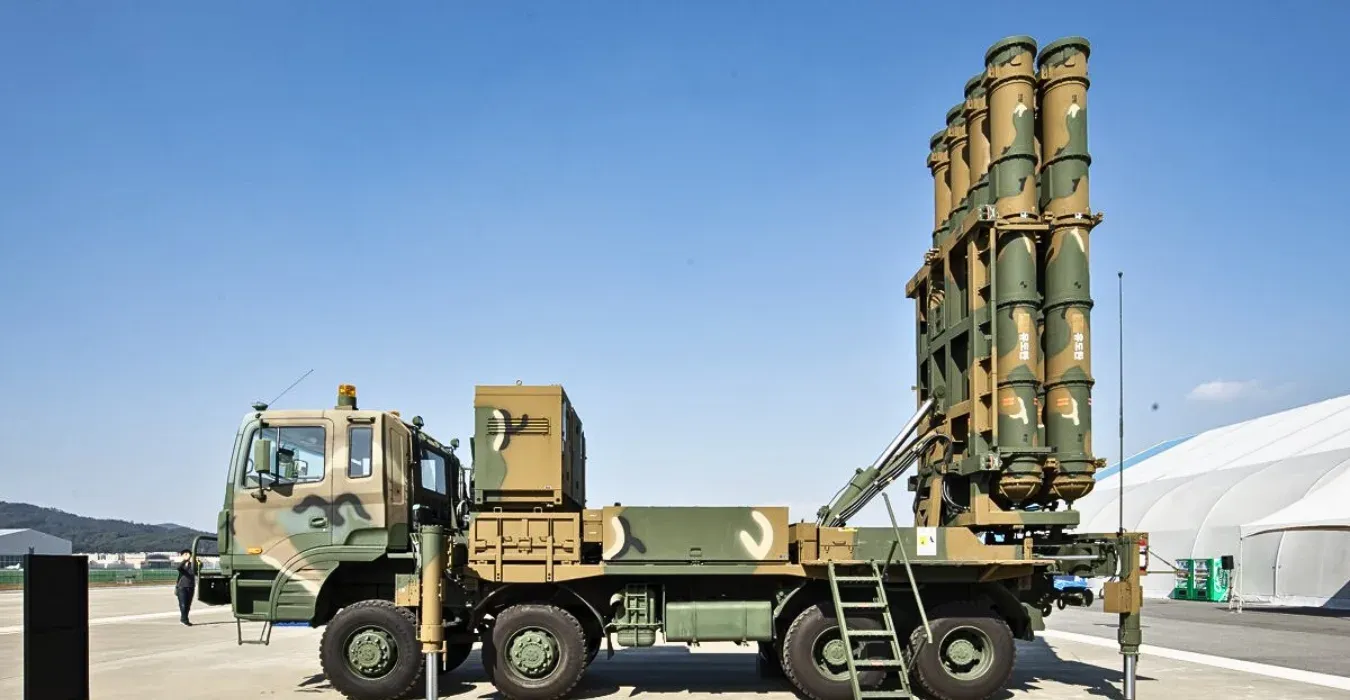
Each squadron consists of two batteries, 12 launchers, and up to 128 missiles, capable of detecting threats up to 600 km and engaging at 400 km, across altitudes from 0–30 km.
May 7–8 Engagement: Pakistan’s Failed Retaliation
Following India’s surgical strikes on May 7 targeting terror hubs, Pakistan launched drones and missiles — including possibly its long-range Shaheen-3 — at Indian cities and military targets. Among the 15 targets were Jammu, Amritsar, Srinagar, Pathankot, Bhuj, Phalodi, Ludhiana, and Chandigarh.
S-400’s Performance
- Destroyed eight missiles over Jammu alone.
- Neutralized over 15 drones/missiles across multiple regions.
- Prevented damage to key airfields, civilian airports, and city centers.
- Integrated air surveillance ensured early warning and high interception accuracy.
The Indian Air Force (IAF) also reportedly used Israeli Harpy drones to disable Pakistani radar systems near Lahore, weakening enemy air defenses.
Strategic and Psychological Impact
According to Air Marshal Sanjeev Kapoor (Retd), the S-400 “created a shield Pakistan could not penetrate.” Pakistan has since relocated its F-16 fleet beyond the S-400’s range, highlighting the system’s deterrent power.
Moreover, the engagement validated the S-400’s capability to:
- Intercept MIRV-capable threats like the Ababeel and Shaheen-3.
- Neutralize low-altitude drones in asymmetric warfare scenarios.
- Maintain radar accuracy even under electronic jamming.
India-Russia Partnership: Deliveries & Integration
Despite Ukraine conflict-induced delays, India is on track to receive the remaining two squadrons by early 2026. Discussions in late 2024 between Defense Minister Rajnath Singh and President Putin expedited shipment timelines.
Training, operational drills, and integration into India’s broader air defense grid — including systems like the Akash-NG and Barak-8 — are complete for the existing squadrons.
Pakistan’s Strategic Dilemma
Pakistan’s response has been largely rhetorical. While warning of “further retaliation,” it faces a significant technological disadvantage. Its reliance on the Chinese HQ-9 system — considered inferior to the S-400 — and exposure of vulnerabilities during the Lahore radar neutralization add to its operational challenges.
Meanwhile, Pakistani media has reported public panic in cities like Lahore and Bahawalpur, with satellite images indicating hasty repositioning of key assets.
Global Reactions and Strategic Outlook
Major global powers, including the U.S., Russia, and China, have called for restraint. NATO continues to monitor the situation, wary of the S-400’s expanding footprint in Asia, especially due to its ability to target stealth aircraft and hypersonic weapons.
The incident has reinforced the S-400’s role as a cornerstone of India’s air defense strategy, not just in South Asia but in the global defense discourse.
Conclusion
India’s S-400 “Sudarshan Chakra” has proven its worth in live combat scenarios, effectively neutralizing an aerial barrage and reaffirming its place as one of the most potent missile defence systems in the world. As India bolsters its deterrent capabilities with upcoming squadrons, the system ensures a protective dome over key strategic assets and symbolizes a new era of airspace dominance in South Asia.
