
 SECURITY ALERT

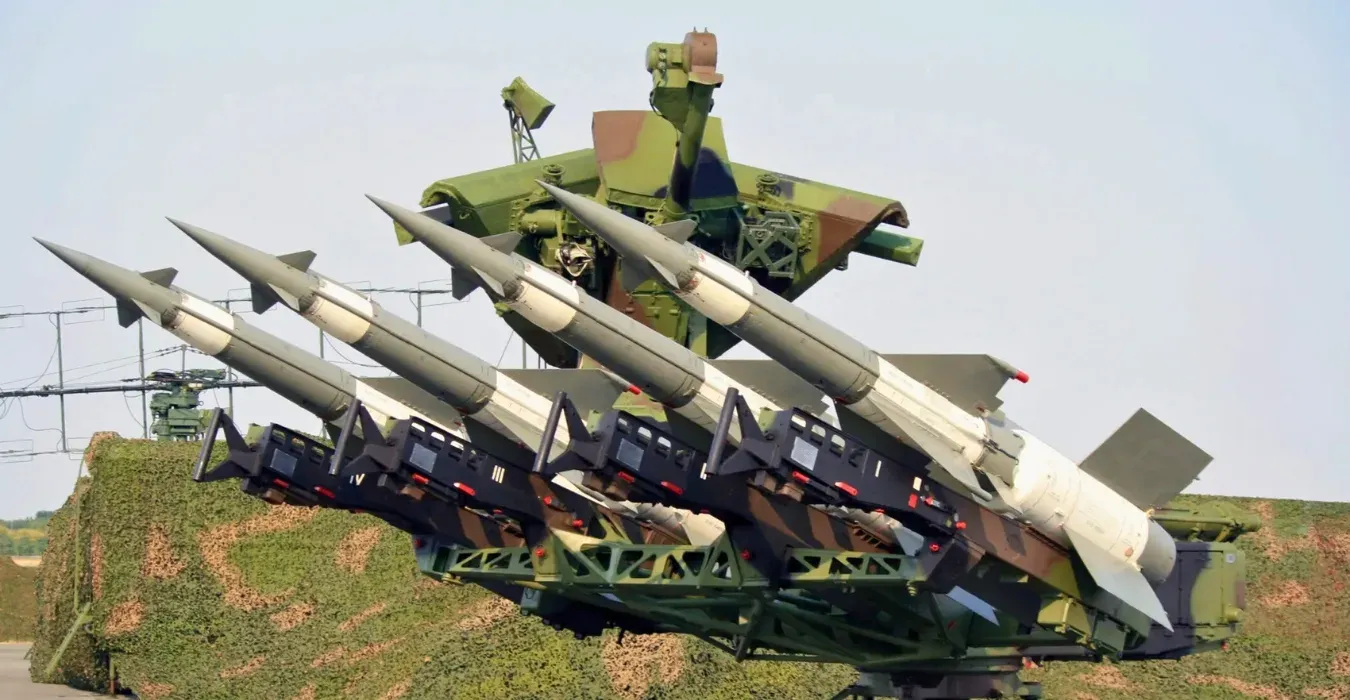
The Silent Sentinels of the Sky
The roar of a fighter jet. The whistle of a ballistic missile. The quiet buzz of a drone over a dark mountain ridge. These are the sounds of modern warfare and the reasons India has built one of the world’s most sophisticated air defence networks. For a nation that spans over 3.2 million square kilometers and shares volatile borders with two nuclear-armed neighbors, the ability to detect, track and destroy aerial threats isn’t just a military requirement — it’s a national necessity.
The Invisible Shield: How India Defends Its Skies
At first glance, India’s air defence might seem like a tangle of radars, missiles, and tech jargon. But underneath the acronyms lies a beautifully layered architecture — much like the rings of a fortress, each layer more focused, more lethal.
First Line: Watching from the Sky
India’s eyes in the sky — the Falcon AWACS and Netra AEW&C aircraft — are like guardian angels with radar wings. From 30,000 feet, they can scan hundreds of kilometers ahead, picking out enemy aircraft or missiles long before they enter Indian airspace.
On the ground, Rohini and Arudhra radars sweep the skies relentlessly. If a rogue fighter jet or a fast-moving missile appears, it won’t go unseen.
Second Line: Missiles Ready to Strike
Once detected, threats are dealt with swiftly by an arsenal of missile systems, each designed for a specific type of enemy.
Akash – India’s pride, this indigenous surface-to-air missile can take out fighter jets and drones within a 30 km radius.
Barak-8 – Co-developed with Israel, this system guards against airborne threats over 70 km away.
SPYDER – Agile and fast, it can lock onto targets like low-flying aircraft or UAVs in seconds.
Third Line: Against the Unthinkable
India is also quietly mastering the ability to destroy ballistic missiles in midair — weapons that travel faster than sound and carry devastating payloads.
Its Ballistic Missile Defence (BMD) program is built on two secretive interceptors:
PAD – Strikes missiles in the upper atmosphere.
AAD – Finishes the job closer to the ground.
Only a few countries — the US, Russia, Israel, and China — have similar capabilities. India is in elite company.
Homegrown Heroes: The Rise of Indian Defence Innovation
Every radar pulse and missile launch tells a deeper story — of Indian scientists, engineers, and soldiers pushing the limits of what’s possible.
Thanks to DRDO and India’s growing private defence sector, the country no longer just buys technology — it builds it.
The new Akash-NG will be lighter, faster, and smarter.
QRSAM can defend moving convoys in real time.
The XRSAM, in development, will fill the gap between India’s mid-range and ultra-long-range missile systems.
And then there’s the future: directed-energy weapons, hypersonic interceptors, and AI-powered surveillance networks. For India, defence is no longer just a matter of arms — it’s a matter of innovation.
Enter the Titan: S-400 Triumf
In 2021, India began deploying a game-changer — the Russian-made S-400 Triumf. If the BMD is India’s shield, the S-400 is its spear.
With the power to:
- Detect stealth aircraft from 600 km away,
- Intercept targets at 400 km distance,
- Track 300 aerial threats simultaneously.
The S-400 is a nightmare for any adversary. And it’s already watching over India’s skies, silently daring any intruder to make the first move.
The Drone Wars Are Here
The next war may not be fought with jets or missiles — but with silent, cheap drones. The 2021 drone attack on an airbase in Jammu was a wake-up call.
India’s answer? A new breed of anti-drone systems:
DRDO’s Anti-Drone Tech can detect, jam, and laser down drones within seconds.
‘SkyDome’ Shield protects key cities and military bases.
Even the infantry now carry SMASH 2000 Plus rifles that can shoot a moving drone out of the sky with pinpoint accuracy.
The skies are changing, and India is changing with them.
One Command, One Shield: The Air Defence Command
Until recently, India’s air defence was spread across the Army, Navy, and Air Force — each with its radars, interceptors, and rules of engagement. That’s changing fast.
The creation of an Air Defence Command (ADC) under the Indian Air Force will unify all assets, streamline responses, and create a truly integrated aerial shield.
Think of it as the brain connecting the eyes, ears, and fists of India’s sky warriors.
When It Mattered Most: Operation Sindoor
It was early 2024. Intelligence warned of a coordinated cross-border threat brewing along the northern frontiers — drones, missile launchers, and the possibility of a surprise aerial strike. The mission: neutralize the threat before it could reach Indian soil.
What followed was a textbook execution of India’s air defence doctrine.
What Happened During Operation Sindoor?
S-400 batteries silently took position in Ladakh, locking enemy aircraft before they even neared the Line of Actual Control.
AWACS and Netra aircraft flew 24/7, ensuring there wasn’t a single blind spot.
Akash and QRSAM units, stationed across multiple high-risk zones, brought down over a dozen hostile drones.
The Integrated Air Command and Control System (IACCS) stitched together real-time feeds from every radar and every aircraft into a single decision-making dashboard.
Not a single Indian forward base was touched. Not a single life was lost due to an aerial threat.
As one Air Force commander later said, “We didn’t just repel an attack — we proved that India’s sky is no longer a soft target.”
The Road Ahead: Sky Is No Limit
India’s air defence might be formidable today, but tomorrow’s threats are faster, smarter, and harder to see. Hypersonic missiles, cyber-warfare, autonomous drone swarms — the battlefield is evolving.
India is preparing
Phase 2 of its BMD to counter intercontinental ballistic missiles (ICBMs).
Laser-based directed energy weapons, which may one day shoot down missiles at the speed of light.
AI-linked command systems, which can reduce reaction time from minutes to seconds.
A Nation That Watches the Sky: Sleeps in Peace
To most people, air defence is invisible. You don’t see it when it works. There’s no explosion. No headline. Just silence.
But behind that silence is a network of systems, a legion of watchful eyes and a commitment to protect over a billion people — day and night.
From Operation Sindoor to the high Himalayas and the depths of the Indian Ocean, India’s air defence is no longer just reactive — it’s proactive, predictive, and powerful.
When the next threat comes from the skies, India won’t just be ready — it’ll be waiting.
