
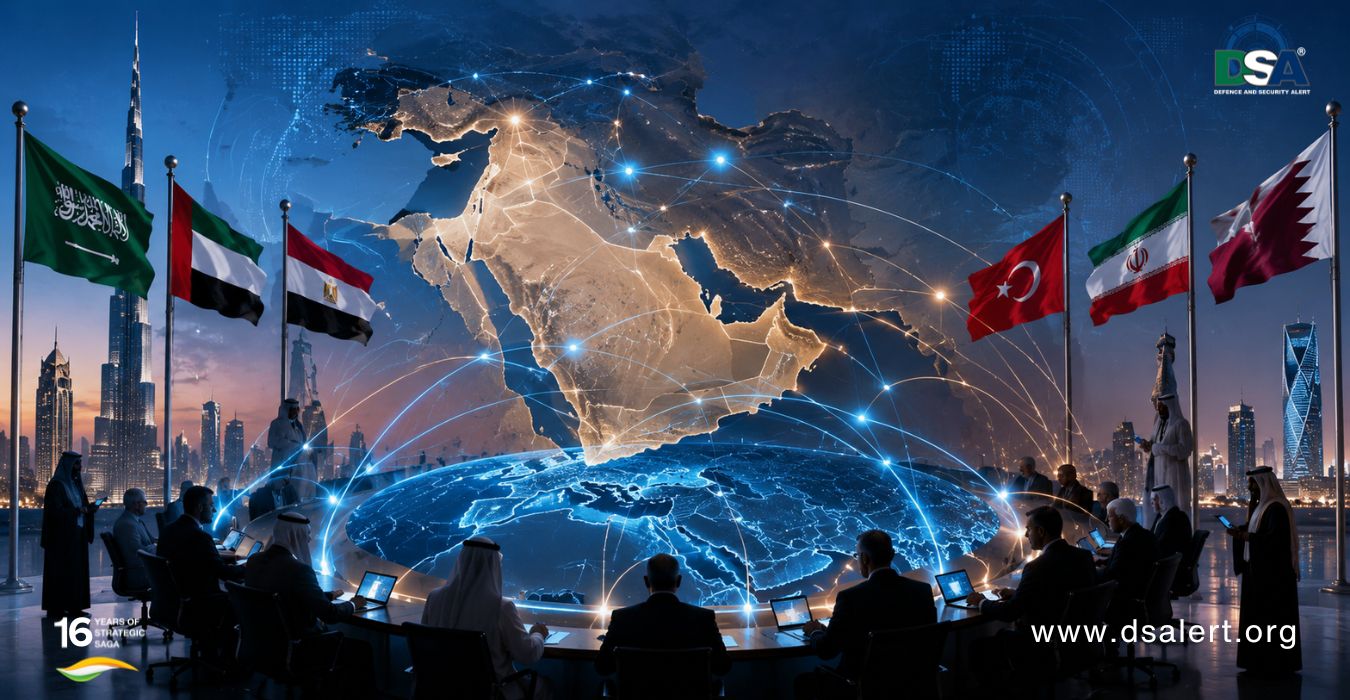
Digital diplomacy has become one of the most potent tools in current international affairs. Digital platforms have become more than tools of communication in a context of geopolitical rivalry, societal transformation, ideological contestation and periodic security crises. They have become tools of diplomacy, strategic communications, public engagement, narrative building and in certain circumstances, information warfare.
The advent of social media and digital technology has revolutionised the way in which governments communicate with individuals, regional actors and the broader international community. Foreign ministries, embassies, military institutions and political leaders are increasingly turning to platforms such as X, Facebook, Instagram and YouTube to reflect national perspectives, respond to crises, influence public opinion and project a positive image around the world.
Yet in the Middle East, digital diplomacy is still a double-edged weapon. It holds the promise of faster communication, wider engagement and more channels for discussion. But technology also poses grave dangers in the form of deception, propaganda, cyber warfare, digital spying and manipulation of public opinion. As a result, the region’s digital space has become a diplomatic arena and a geopolitical battlefield. This article follows the main premise of the posted draft that digital diplomacy is changing the traditional diplomatic procedures and influencing the regional stability, collaboration and conflict management in the Middle East.
The digital age is altering diplomacy
Traditional diplomacy was mostly conducted through official meetings, secret negotiations and formal communication between states. Digital diplomacy has widened the framework, enabling governments to engage directly with foreign publics, diaspora communities, civil society organisations and international media. It has made diplomacy more immediate, more visible and more contested. Official statements can now be made in minutes. Political narratives can be magnified in real-time on a global scale. A diplomatic communication is aimed not just at another government, but also at its population, journalists, activists, analysts and foreign opinion-makers.
The change is especially significant in the Middle East. The region has a long history of competing narratives, ideological differences and geopolitical rivalry. Digital platforms allow states to present their own narrative of events without complete reliance on traditional media. Thus, online communication has become a vital aspect of foreign policy and strategic influence.
Social Media as a Tool of Diplomacy
Social media has become one of the most important tools of digital diplomacy. Governments utilise platforms like X, Facebook, Instagram and YouTube to announce policies, protect national interests, promote state narratives and respond to criticism.
The examples of Saudi Arabia and Iran are good examples of the use of digital platforms in the development of the geopolitical position of regional powers. Saudi Arabia has put a lot of money into digital communication to create an image of modernisation, reform and international engagement. At the same time, Iran uses internet forums to advance its regional aims, engage with sympathisers and convey its strategic narrative beyond formal diplomatic channels.
Israel has also developed a very aggressive digital diplomacy approach. The accounts of the Israeli government and military often upload bilingual information for foreign audiences. These fora are used to explain governmental decisions, confront criticism and alter global views in times of crisis. This indicates that social media is not a PR tool anymore. In the Middle East, it has become a tool of statecraft and strategic communication.
Digital Diplomacy and Regional Competition
The digital terrain of the Middle East mirrors the wider political and strategic rivalries of the region. Governments are increasingly turning to internet campaigns, competing hashtags, digital influence operations and narrative warfare in their pursuit of diplomatic contests.
Governments use Internet channels to justify their actions, dispute the claims of adversaries and build support at home and abroad during times of conflict or diplomatic stress.
Digital diplomacy has therefore gained a serious strategic dimension. But that also presents risks. Online narratives can inflame public passions, entrench political positions, and narrow the scope for compromise. Under such circumstances, digital diplomacy does not always need to enable discussion. It can also increase mistrust and add an additional layer of regional animosity. Thus, the impact of digital diplomacy is not simply the result of the technology in itself, but also of the political goal behind its use.
Propaganda, disinformation and the digital battle
One of the gravest concerns in the Middle East digital sphere is online propaganda and disinformation platforms. Social media is used by states and non-state entities to affect public discussion, undermine opponents and shape views. The regional information environment is now filled with fake news, organised online campaigns, cyber espionage, hacking and amplification through bots.
A instance in point and one that is particularly relevant, is the digital battle between Iran and Israel. The two countries have accused one other of hacking and digital influence efforts, showing the growing intersection of diplomacy, cybersecurity and geopolitical rivalry.
This links digital diplomacy very closely with questions of national security. The digital space in the Middle East is not just a place of communication, but also a platform for confrontation.
The Power of Citizen Mobilisation and the Arab Spring
The Arab Spring is still one of the biggest examples of the political impact of social media in the Middle East. Beginning in December 2010 protests broke out in several Arab nations, including Tunisia, Egypt, Libya, Yemen, Bahrain and Syria. Activists used social media platforms to coordinate protests, communicate information and rally public support. They gave citizens a way to avoid state-controlled media and disseminate their message to local and international audiences.
The Arab Spring was a demonstration of the power of digital platforms to amplify the voices of the citizens and to shape political processes, but it also revealed the limits of internet activism. Social media can mobilise protest movements but not build durable political institutions, ensure democratic transition or solve major structural problems.
This is still one of the most basic lessons of digital politics in the Middle East: online mobilisation can be powerful but it is no substitute for sustainable political reform.
Digital Statecraft and the Gulf States
The GCC countries have been pursuing digital transformation. Saudi Arabia, the United Arab Emirates, Qatar and Bahrain have invested in e-government, smart cities, artificial intelligence, digital infrastructure and technology-led economic diversification. These efforts are closely linked with broader national plans to reduce oil dependency and develop knowledge economies. Digital diplomacy supports these aspirations by branding the Gulf States as modern, inventive and globally connected. For example, the United Arab Emirates has used internet channels to promote themes of tolerance, religious discussion, cultural openness and international cooperation.
Such initiatives have a role in increasing its soft power and its global image. The digital landscape in the Gulf is at the same time highly competitive. States use online channels to wield influence, shape perceptions and build regional narratives. Digital diplomacy in the Gulf is therefore closely linked to power, prestige and strategic positioning.
Public Diplomacy and Diaspora Outreach
Digital diplomacy has also enhanced the ability of Middle Eastern regimes to reach out to expatriate communities. Governments can utilise Internet channels to offer consular updates, communicate in crises and stay in touch with nationals living abroad.
This is especially relevant for countries with large expatriate populations or areas affected by violence. Digital platforms enable governments to contact these people quickly, directly and at a relatively low cost. Thus, the participation of diasporas has become an important feature of public diplomacy. It extends the state’s reach beyond geographic bounds and helps spread the messages of its foreign policy through transnational networks.
Digital Platforms and the Trust Question
The catch? Digital diplomacy has one significant problem: believability. In much of the Middle East, public faith in government messaging is low. This undermines the effect of official messaging and opens digital diplomacy to critique.
Disinformation simply makes things worse. Many of the region’s web ads are in Arabic, which may deter global tech companies from taking enough interest. Content moderation can be inconsistent, politically sensitive and vulnerable to commercial or strategic pressures.
This is an alarming development for the role of private internet companies in global relations. Social media is no longer neutral space. Their algorithms, moderation procedures and political choices can influence the nature of public debate and diplomatic narratives.
Credibility is a key ingredient of successful digital diplomacy. If there is no trust, the Internet risks becoming propaganda, not diplomacy. Possibilities for regional cooperation Digital diplomacy can also open prospects for cooperation. It can be used for crisis communication, humanitarian coordination, consular assistance and dialogue between parties in conflict. When face-to-face meetings are not possible owing to political or practical reasons, online meetings and digital means of communication may provide alternative means of contact.
Digital platforms can also help to enhance collaboration on cybersecurity, climate change, public health, disaster response, education and economic connections.
In a corner of the world where political tensions often shut down traditional diplomacy, digital means can offer limited but useful openings for communication. But the real opportunities for digital diplomacy are in augmenting traditional diplomacy. It will not replace negotiation, trust, institutional participation or face-to-face interaction. Technology is a tool for diplomacy. It cannot replace the political will that is needed to create peace and collaboration.
Risks to the Region’s Strategy
The stakes are high in the digital diplomacy of the Middle East. They include disinformation, propaganda, cyber-attacks, digital espionage, online radicalisation, manipulation of public opinion and digital surveillance. These dangers are particularly dangerous in view of the unresolved wars, fragile political arrangements and intense regional rivalries that already exist in the Middle East. Communication through digital platforms can help reduce tensions, while negative narratives spread through them might exacerbate instability. States’ responsible use or weaponization of digital tools as tools of confrontation will be the shaping forces of digital diplomacy in the area in the future.
Conclusion
Digital diplomacy has become a fundamental instrument of affecting international relations in the Middle East. It has altered the relation between states, the participation of citizens in politics and the production of regional narratives.
For governments, digital platforms bring speed, reach and influence. They enable states to speak directly to global audiences, to manage crises, to reach out to Diasporas and to bolster the national image. Digital technologies offer new opportunities for individuals and civil society to participate, mobilise and connect globally. But digital diplomacy has its serious perils. Disinformation, propaganda and cyber conflict and monitoring can weaken trust and exacerbate instability. In the Middle East, where geopolitical rivalries are already fierce, the digital domain has become an extension of strategic competition.
Digital diplomacy should therefore not be understood as a technological breakthrough only. It is a strategic instrument of modern statecraft. Its effectiveness is built on credibility, ethical communication, institutional competency and the ability to deal with digital dangers.
The question for the Middle East is not if digital diplomacy will continue to thrive. “Sure it will. The real question is whether it will be used to create discussion, cooperation and stability or to exacerbate mistrust, polarisation and confrontation.”
References
1. Zayani, M. The Digital Middle East: State and Society in the Age of Information. Oxford University Press. .
2. DiploFoundation. 3. Available at: diplomacy.edu
3. Bjola, C. (2015). Introduction: Facing the reality of Digital Diplomacy In Digital Diplomacy: Theory and Practice Routledge.
4. Hocking, B. and Melissen, J. (2015). Digital Diplomacy. Clingendael Institute. .
5. Manor, I., & Bjola, C. The Oxford Handbook of Digital Diplomacy Oxford University Press
6. Ben-Simeon, D. (2020). “Israel’s Digital Diplomacy: The Case of Successful Communication.” Journal of the Middle East Studies.
7. Hassan, M. (2019). “Social Media and Propaganda in the Middle East.” Middle East Journal.
8. Kobil, L. (2021). Cybersecurity and Digital Diplomacy: Middle East Cases. . Security Review. . International.
Nouri, A. (2018). 9. “The Role of Social Media in the Arab Spring.” Journal of Arab Studies.
10. Williams, T. (2022). Digital War in the Middle East: Iran and Israel. Cybersecurity Magazine
11. Gunter, B., Elareshi, M. & Al-Jaber, K. (2016). Social Media in the Arab World: Communication and Public Opinion in the Gulf States I.B.Tauris
12. Zaharna, R.S. (2021). “Wake-up call for people-centred public diplomacy in the pandemic’s wake”. Place Branding and Public Diplomacy.
