
Abstract
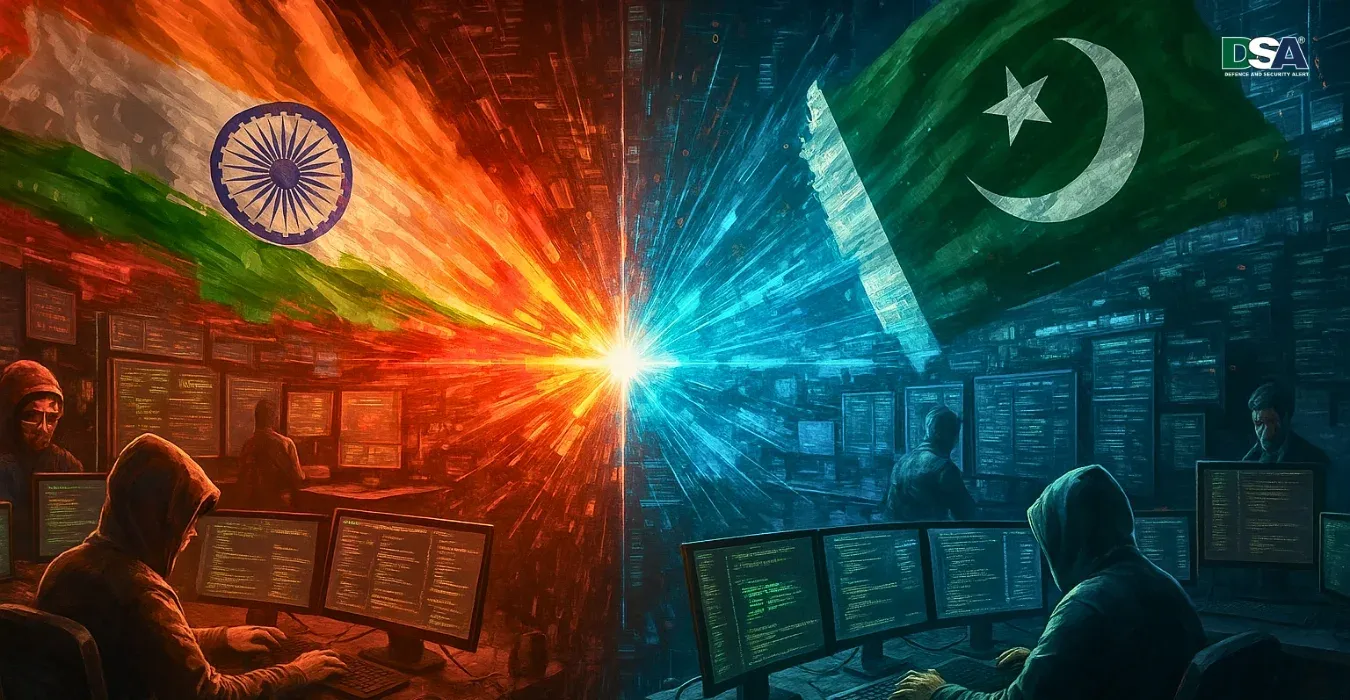
In the age of hybrid warfare-where geopolitical confrontations transcend the physical domain and unfold across digital and cognitive spheres—narrative dominance plays a critical role in shaping both national perception and global legitimacy. This article analyses the aftermath of Operation Sindoor, a precision strike executed by India in May 2025 against terror infrastructure in Pakistan Occupied Jammu & Kashmir (PoJK) and critically evaluates the digital counter-narrative launched by Pakistani actors. Through triangulation of verified government statements, media reports, legal frameworks, and cross-cultural content analysis of social media discourse, the study contrasts India’s strategically restrained, lawful, and symbolically inclusive narrative—especially marked by the presence of women in command—with Pakistan’s provocative, misogynistic, and propagandistic hashtag campaign. It argues that in contemporary conflicts, narrative integrity—anchored in truth, legality, and ethics-functions as a sovereign deterrent in the information domain..
Introduction
The traditional metrics of victory in warfare—territory, casualties, and force projection are no longer sufficient. In contemporary conflicts, narrative dominance determines who appears legitimate, rational, and strategically coherent. The latest phase of India-Pakistan escalation emerged in the aftermath of the Phalgam terror attack in April 2025, where multiple Indian civilians and security personnel were targeted in a cross-border insurgent ambush traced to launchpads in PoJK. In response, India’s limited, lawful, and precise military strike on terror infrastructure was not met by Pakistan with reciprocal clarity or evidence. Instead, the response was orchestrated through a wave of vulgar hashtags, doctored media, gendered symbolism, and satirical memes, primarily disseminated across Twitter (now X), Instagram, and other social media platforms.

This shift from formal military communication to decentralized, meme-heavy trolling campaigns signals a deliberate tactical migration from battlefield logic to psychological operations, albeit executed with little cognitive discipline or ethical reastraint. Pakistan’s disinformation apparatus activated a surge of hashtags such as #OperationSuhaagRaat, #Sindoor_Ban_Gaya_Tandoor, and others that sought to culturally and emotionally provoke Indian audiences.
This article offers an academic analysis of that information warfare episode—examining the narrative weapons employed, the psychological impact attempted, and India’s dignified counter-positioning that reinforced its status as a rules-based, sovereign, and restrained democracy.
India’s Strategic Messaging and Legal Clarity
On May 7, 2025, a joint press conference by the Indian Armed Forces presented a transparent account of Operation Sindoor. Key points included:
- According to the Government of India, the strike was a necessary and proportionate response to neutralize active cross-border terror threats originating from Pakistan Occupied Jammu & Kashmir (PoJK). It was conducted with precision and strategic restraint, aimed solely at counterterrorism objectives.
- It was a non-escalatory, limited objective strike aimed solely at cross-border terror launchpads.
- Intelligence inputs confirmed minimal collateral damage, and the use of precision-guided munitions underlines India’s commitment to international humanitarian norms.
This official communication—devoid of chest-thumping or political rhetoric-was bolstered by the presence of Col. Sofiya Qureshi and Wg. Cdr. Vyomika Singh, the lady officers of Indian Armed Forces involved in operational planning. Their inclusion were both symbolically and strategically significant, contrasting starkly with the misogynistic and culturally offensive portrayal of women in Pakistani digital propaganda.

Pakistan’s Counter-Narrative: Propaganda Disguised as Parody
Rather than using official defence channels to articulate a state response, Pakistan chose a decentralized, meme-driven strategy. Prominent social media influencers, anonymous troll accounts, and digitally edited visuals were used to disseminate provocative content under hashtags such as #OperationSuhaagRaat. These campaigns trivialized the Indian operation, mocked cultural practices (such as the application of sindoor), and sought to reduce a legitimate military operation to the level of a sexualized farce.
Key patterns in Pakistan’s disinformation campaign included:
- Visual satire mocking Indian women and soldiers.
- Fake news screenshots, misattributed to Indian media outlets like The Hindu and ANI.
- Cartoons and memes portraying Indian military ops using gendered imagery.
- Videos from parody accounts, framing war as comedy.
This kind of psychological warfare, laced with misogyny and vulgarity, reflects an absence of both ethical boundaries and strategic maturity. Moreover, it raises concerns about state complicity in weaponizing social media to erode truth, decency, and institutional decorum.
Empirical Content Analysis of Pakistani Disinformation
A structured content analysis conducted during the peak of the digital campaign identified the following themes:

These techniques belong to the broader category of cognitive warfare, where the adversary seeks to dominate the perception space, not through facts, but via repetition, ridicule, and emotional targeting.
Symbolism and the Role of Women: A Narrative Crossroads
India’s selection of the term “Sindoor” as the operational codename carries deep cultural resonance. Far from being a soft target for satire, sindoor represents sacrifice, dignity, and life in Indian tradition. The very act of mocking it reveals the strategic immaturity and cultural insensitivity embedded in the Pakistani propaganda playbook.
In contrast, the Indian Armed Forces, through the visible leadership of Col. Sofiya Qureshi and Wg Cdr. Vyomika Singh, affirmed the integration of women not merely in ceremonial roles but in strategic decision-making. This counter-symbolism—where the woman is not the subject of satire but the bearer of command—defeats Pakistan’s intent at a psychological level.

The representation of lady officers was not a symbolic exception but part of a broader institutional reform. As of 2024, over 1,550 women officers serve in the Indian Armed Forces in commissioned roles. In a historic move, the Indian government opened the National Defence Academy (NDA) to women in 2021, enabling entry into core combat branches. The Indian Air Force currently deploys female fighter pilots, and the Army has operationalised women in Military Police roles. Therefore, female presence in strategic briefings reflects a structural integration.

The Paradox of Obscenity in Pakistani Legal and Media Culture
According to a legal commentary published in The Express Tribune (2012), obscenity laws in Pakistan remain ill-defined, selectively enforced, and often deployed to suppress dissent, especially among women artists and journalists. Under Section 292 of the Pakistan Penal Code, obscenity is criminalized, but the criteria are vague and often interpreted by courts without a consistent standard.
Yet, during moments of geopolitical tension, Pakistani digital space—often populated by verified state-linked accounts-freely disseminates vulgar hashtags symbolism to provoke neighbouring states.
This contradiction reveals a double standard: one that censors women for self-expression within the country, yet encourages the degradation of women in foreign adversaries through digital campaigns.
India’s Strategic Communication: Fact, Restraint, and Institutional Credibility
India’s response to this disinformation offensive was notably devoid of emotional counter-messaging. It relied instead on:
- The PIB Fact Check Unit, which flagged fake news attributed to Indian media and defence sources.
- Spokespersons from the Ministry of Defence and Ministry of External Affairs, who clarified the scope and rationale of the operation.
- Think tanks and OSINT analysts, who collaborated to publicly debunk falsehoods.
India chose not to retaliate with equally vulgar hashtags. This is not silence; it is restraint as strategy, asserting the idea that truth, when presented with dignity, is the most effective narrative weapon.
While informal digital actors may operate across the Indian social media landscape, the Government of India’s narrative posture is firmly anchored in official briefings, verified data, and institutional communication. India has maintained a clear line between state communication and digital populism. Bodies such as the Press Information Bureau (PIB) and Ministry of External Affairs routinely issue clarifications to prevent misinformation, even from internal sources.
Conclusion: Dignity as Powerful weapon in the Narrative Domain
In contemporary geopolitics, the lines between truth and theatre are increasingly blurred. The case of Operation Sindoor reveals that while Pakistan weaponized memes, India relied on legitimacy, operational transparency, and cultural symbolism.
The strength of a nation lies not only in its capacity to strike, but in its ability to communicate that strike with clarity, legitimacy, and restraint. India has demonstrated that strategic silence, when guided by legality and integrity, is more powerful than viral hashtags.
By refusing to play into vulgar narrative traps and empowering women in defence leadership, India did not just counter disinformation-it redefined narrative superiority.
References
- Indian Express. (2025, May 7). Indian Armed Forces press conference: Operation Sindoor and response to Pakistan. https://indianexpress.com/article/india/indian-armed-forces-press-conference-today-operation-sindoor-pakistan-pok-9987363/
- The Express Tribune. (2012, August 30). Defining Obscenity in Pakistan. https://tribune.com.pk/story/426113/defining-obscenity-in-pakistan
- United Nations. (1945). Charter of the United Nations, Article 51. https://www.un.org/en/about-us/un-charter/full-text
