
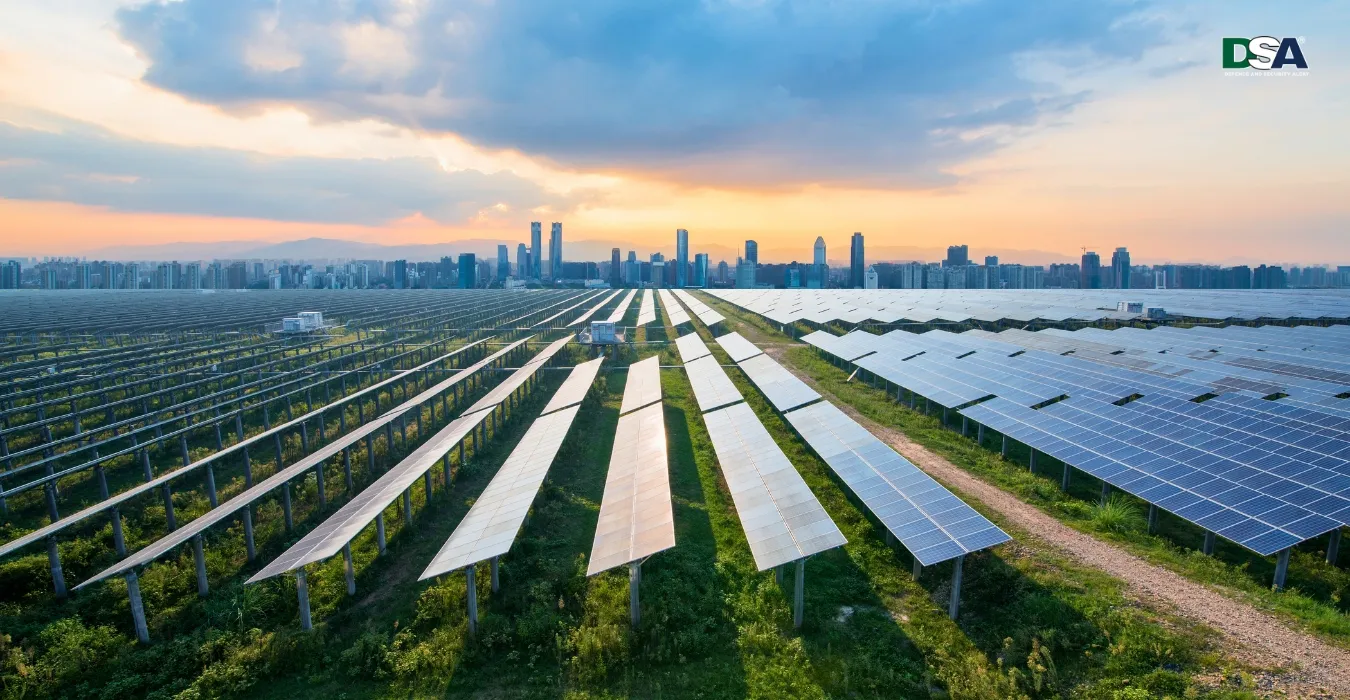
In the era of climate disruptions, water disputes, and unpredictable border tensions, national security can no longer be defined by military assets alone. Energy, particularly solar energy, has quietly emerged as a key instrument of spacecraft. It powers not just farms and households but also stabilizes border economies, strengthens defence coordination, and signals a long-term presence in remote, strategic zones. India’s Pradhan Mantri Kisan Urja Suraksha evam Utthaan Mahabhiyan (PM-KUSUM) scheme, originally envisioned as a tool for agricultural power, now holds far greater potential. If refocused strategically, it can reinforce border security, ensure food sovereignty, and reduce dependence on geopolitically vulnerable resources.
Energy Poverty Along the Borders: A Strategic Weakness
Border states like Punjab, Rajasthan, Jammu and Kashmir, and Ladakh face an interlocking crisis: unreliable electricity, diesel-dependent irrigation, and shrinking water tables. Over 60% of irrigation pumps in the Rajasthan and Punjab areas still run on diesel. Grid outages lasting 4-8 hours a day are common. These states also happen to be key food producers, together contributing over one-third of India’s rice and wheat supply. When villages in these zones remain underpowered, security suffers silently. Surveillance and communication systems rely on steady electricity. Diesel coordination for both civilians and defence units becomes a high-risk, high-cost burden. Most importantly, development fatigue in such regions can breed disaffection, posing a long-term threat to internal stability.
PM-KUSUM: From Development Scheme to Strategic Infrastructure
The Pradhan Mantri Kisan Urja Suraksha evam Utthaan Mahabhiyan (PM-KUSUM) has three components: solarization of existing grid-connected pumps, off-grid solar pump deployment, and installation of decentralized solar power plants on barren land. If deployed smartly, these assets can serve dual-use purposes: feeding energy to farms by day and defence posts by night. Estimates suggest that targeted implementation in the above-mentioned states could cut annual diesel use by over 1 billion litres, besides reducing subsidy loads and carbon emissions. In the pilot zones of Rajasthan, solarization under PM-KUSUM has improved irrigation regularity and allowed a 15-20% increase in cropping intensity, with notable improvement in income stability. Such shifts also help farmers stay rooted to the land, especially in sensitive areas prone to demographic shifts and migration.
From Agricultural Empowerment to Strategic Asset Deployment
The Indus Water Treaty (IWT), while internationally praised for stability, limits India’s full use of western waters. Canal-based irrigation remains unreliable in many parts of Jammu, Kashmir, and Punjab, forcing a turn to diesel-based groundwater extraction. In such a scenario, solar-powered irrigation becomes a quiet but effective tool of resource sovereignty. Unlike water flow, solar input is not subject to diplomatic negotiation. Empirical evidence shows that the U.S. and Israel are deploying solar microgrids to secure remote defence bases and reduce dependence on vulnerable fuel convoys. To integrate solar energy with the national security imperatives, several policy directions are vital. First, energy-deficient border districts should be declared as “Solar Security Priority Zones”, enabling expedited regulatory clearances and targeted resource allocation. Financing for these initiatives can be borrowed through green bonds and defence-aligned Corporate Social Responsibility (CSR) funds, especially directed towards solar infrastructure in strategic locations. A coordinated deployment strategy between the Ministry of New and Renewable Energy (MNRE) and the Ministry of Defence is essential, particularly for the dual use of solar assets near military posts, which serve both civilian and strategic needs. Moreover, mandating land pooling and participatory village-level planning under Component A of the PM-KUSUM scheme in border talukas can enhance local ownership and implementation efficiency. Together, these measures do more than power agriculture; they embed resilient state infrastructure in the vulnerable frontier zones, simultaneously advancing rural development and reinforcing national deterrence.
Conclusion: The Silent Strength of Solar
India’s future wars may not just be fought with bullets- they may be fought with water, energy, and resilience. Solar energy, as one of the rapidly growing sources of clean energy, has become more than a tool for economic upliftment. It becomes a line of territorial affirmation, a means of securing local economics, and a silent yet potent national asset. The Central government’s scheme, PM-KUSUM, when seen through a national security lens, presents a rare chance to align clean energy with defence priorities. In doing so, India can reduce reliance on volatile resources, cut subsidy leakages, and fortify its borders with sunlight.
