
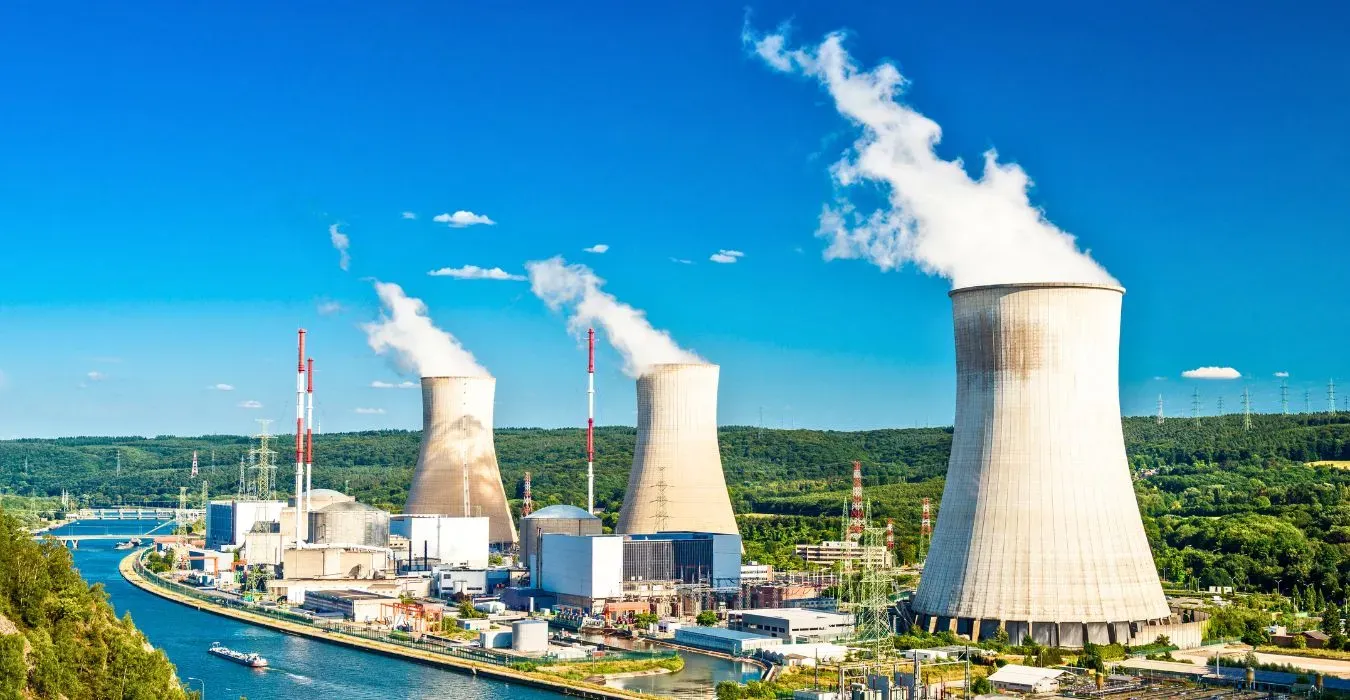
Abu Dhabi Crown Prince Sheikh Khaled Al Nahyan’s visit to India came amid the landmark event of UAE’s Barakah nuclear plant beginning full commercial operation. Being the Arab world’s first nuclear plant to achieve this feat, Barakah – comprising four Korean-designed APR 1400 reactors with a total installed capacity of 5.6GW – will provide up to a quarter of UAE’s electricity, generating 40 terawatt-hours of power annually.
As the Barakah plant is estimated to prevent 24.2 million tonnes of annual carbon emissions, thus contributing to achieving 24 per cent of UAE’s 2030 decarbonisation commitment, the Emirates – according to its envoy to IAEA Hamad Alkaabi – has a plan to set up a second nuclear power plant for meeting its growing demand in electricity over the next decade. Meanwhile, the Kingdom of Saudi Arabia (KSA) too intends to advance its plans to develop a front-end nuclear fuel-cycle infrastructure – Energy Minister Prince Abdulaziz bin Salman revealed in 2023. Moreover, KSA is investigating the possibility of uranium extraction from seawater.
Nuclear Commerce
In 2023, India announced plans to build 10 nuclear power plants -powered by indigenously developed Pressurised Heavy Water Reactors (PHWRs) – in fleet mode, each with 700 megawatts (MW) capacity. The 2011 Fukushima nuclear accident brought nuclear commerce’s safety issue to the fore. So, how safe are Indian reactors in dealing with “beyond design basis” natural events? “They, especially the third reactor onwards, are all provided with double containment for minimising radioactive release to the environment if the fuel melts” – says Dr. LV Krishnan, eminent Nuclear Safety Expert and former Director of Safety Research Group at the Indira Gandhi Centre for Atomic Research in Chennai.
Besides, the containment building has adequate space to hold liquid radioactive wastes. For low-power reactors, the spent fuel would take much longer to overheat and melt. The newer PHWRs under construction are of larger power but have features of cooling by natural circulation and are designed to withstand the absence of off-site power for a minimum of 3 days. The coastal reactors are designed for a combination of natural events like the heaviest known rainfall, highest tide and worst storm surge due to cyclones – all occurring together. This can take care of the worst Tsunami to be expected. Most importantly, the cumulative capacity factor in India-designed and constructed PHWRs has been around 78 per cent with a history of operating continuously for periods exceeding 300 days on average. The 220MW indigenously developed PHWR at Rajasthan Atomic Power Station created a record by becoming the second longest-running reactor in the world, being in operation for 765 days continuously.
Conclusion
Narendra Modi, on a visit to the Middle East, said – “We are not just strong trade and energy partners but also have shared interest in peace, security, stability and prosperity in the West Asian region.” The Middle East is longing for clean energy transition and sustainability and this region can benefit from India’s expertise in setting up uniquely efficient nuclear power infrastructure and novel inventions in nuclear commerce. India’s Prototype Fast Breeder Reactor (PFBR) is expected to be operational by the end of 2025, making it the second country in the world after Russia to have a commercially operating FBR. FBRs are meant to produce and recycle nuclear fuel in the form of plutonium. This version of FBR uses a mixture of uranium and plutonium oxides as fuel. It produces just enough plutonium to sustain operation with no need for external plutonium input due to low breeding gain.
According to Dr. Krishnan, “subsequent designs will be readjusted to increase this breeding gain for using thorium to convert it into another form of uranium (Uranium 233), which is a good nuclear fuel.” Significantly, Indian scientists have also designed a unique prototype Advanced Heavy Water Thorium Breeder Reactor that can revolutionise nuclear commerce because of its capability to produce electricity for two years sans refuelling and control manoeuvring. It is designed to make use of Uranium-233 produced in situ, without having to extract it from the Thorium part.
