
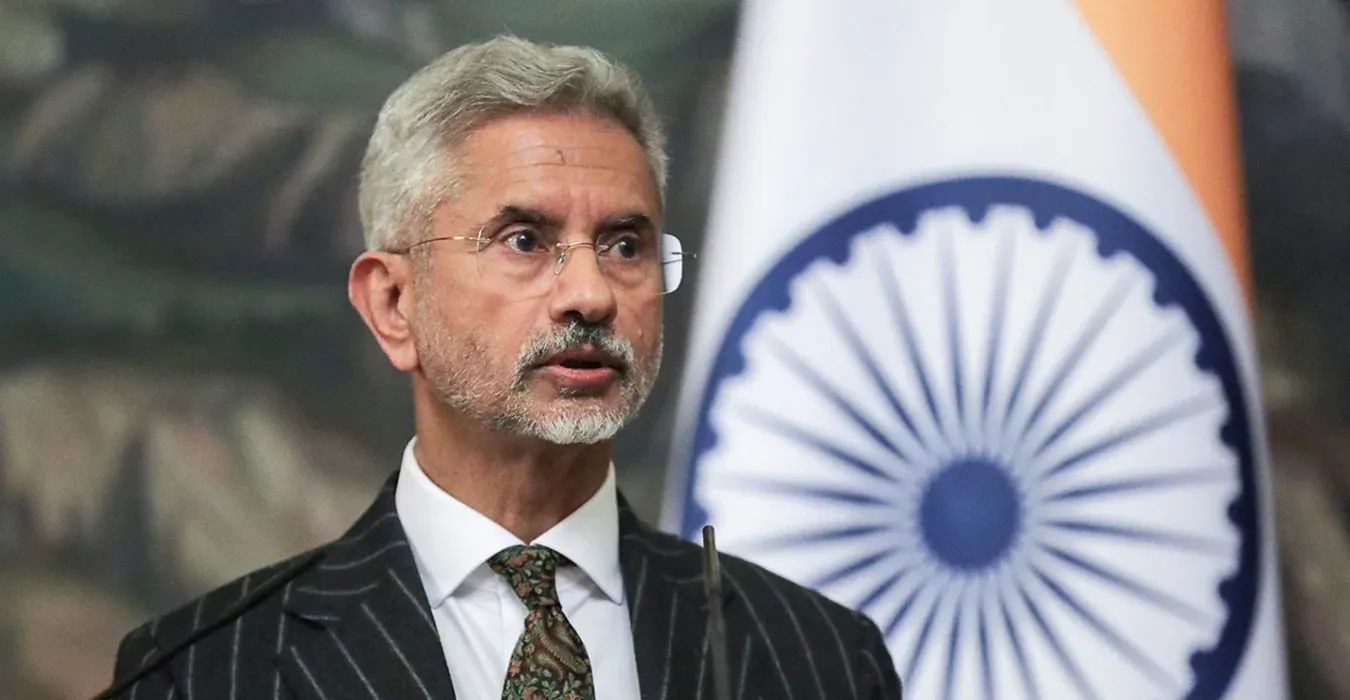
India’s External Affairs Minister Dr. S. Jaishankar recently spoke to an American outlet during his visit to New York. While many were busy dissecting what he said about China, Pakistan, or the UN, what deserves closer attention is how he said it — and what it tells us about the direction of India’s foreign policy.
This was not just a diplomatic interview. It was a strategic signal from a country that is no longer content with reacting to global events. India is now shaping them.
Multipolarity — And India at the Center of It
Dr. Jaishankar once again emphasized that the world is moving towards multipolarity. That’s not new. But what was different this time was his message that India isn’t just a player in this new order — it’s a connector.
“India can play the role of a bridge,” he said. This means India is positioning itself as the country that can talk to everyone — East and West, North and South, developed and developing. Whether it’s Russia and Ukraine or Israel and Iran, India remains one of the few countries that can “pick up the phone” and speak to both sides.
That’s the real diplomatic capital. And it doesn’t come from choosing sides — it comes from consistent, autonomous engagement.
India-US Ties: Built on Structure, Not Just Sentiment
When Dr. Jaishankar spoke of the positive “trend lines” in India-US relations, he wasn’t just referring to Modi-Biden bonhomie. He pointed to something deeper — structural convergence.
From defense tech to the Quad, from shared concerns on the Indo-Pacific to increasing trade linkages, the India-US relationship has become more bipartisan and more long-term. It has survived five US presidencies and shows signs of lasting strength.
Trade Realism Over Trade Optics
Unlike many diplomats who offer polite optimism, Dr. Jaishankar was direct about the challenges in India-US trade negotiations.
“There has to be give and take… I can’t guarantee a deal,” he said. That kind of honesty might sound risky, but it actually builds trust. It shows that India will negotiate hard — and fairly — but won’t sign deals just for photo-ops.
“This is Not an Era of War” — A Global Reminder
Dr. Jaishankar also reminded the world that India’s position on the Russia-Ukraine conflict — calling for dialogue, not war — was initially criticized but is now quoted widely. The phrase “this is not an era of war” has become symbolic of India’s balanced, responsible diplomacy.
It’s a subtle “told you so” to the West, but also a strong message about the kind of international behavior India expects in today’s world.
Quad and China: Cooperation With Eyes Open
On the Quad, Jaishankar expressed cautious optimism. He spoke about the tangible benefits it brings — from vaccines to supply chains —not just its role as a strategic grouping.
On China, he was clear: India wants peace, but not at the cost of fairness. The relationship must be steady, but trade must also be balance. His words reflect a dual approach — engage with China, but also stand firm on national interest.
On Pakistan: Clear, Firm, and Tired of Excuses
Jaishankar didn’t mince words on Pakistan. From the Mumbai attacks to the recent Pahalgam tragedy, he called terrorism an instrument of state policy that has come back to haunt its user.
“No country should use terrorism as an instrument to further its policies,” he said — a message not just to Islamabad, but to the global community: stop tolerating double standards.
UNSC Reform: A Global Demand, Not an Indian Wish
India’s call for United Nations reform was framed in systemic terms. Why are there no permanent members from Africa or Latin America? Why does the world still follow a 1945-era power structure in 2025?
Dr. Jaishankar called for “basic reform” to restore the UN’s credibility — not as a national demand, but a global necessity.
India as a Stable Partner in an Unstable World
Throughout the conversation, one thing stood out: India is no longer the hesitant power of the 1990s. It is now a confident, multi-vector actor that doesn’t wait for validation.
In a world filled with conflict, crises, and uncertainty, countries are not just looking for allies. They’re looking for stable partners. India is Positioning itself to be exactly that.
Final Thought: The World Is Learning to Listen
Jaishankar’s tone was measured, his message firm, and his strategy clear: India will chart its own course, based on its own interests and principles. And the world, slowly but surely, is beginning to listen — not lecture.
In many ways, New York was not just a media appearance. It was a declaration — that India’s foreign policy has grown up. And it’s here to lead.
