
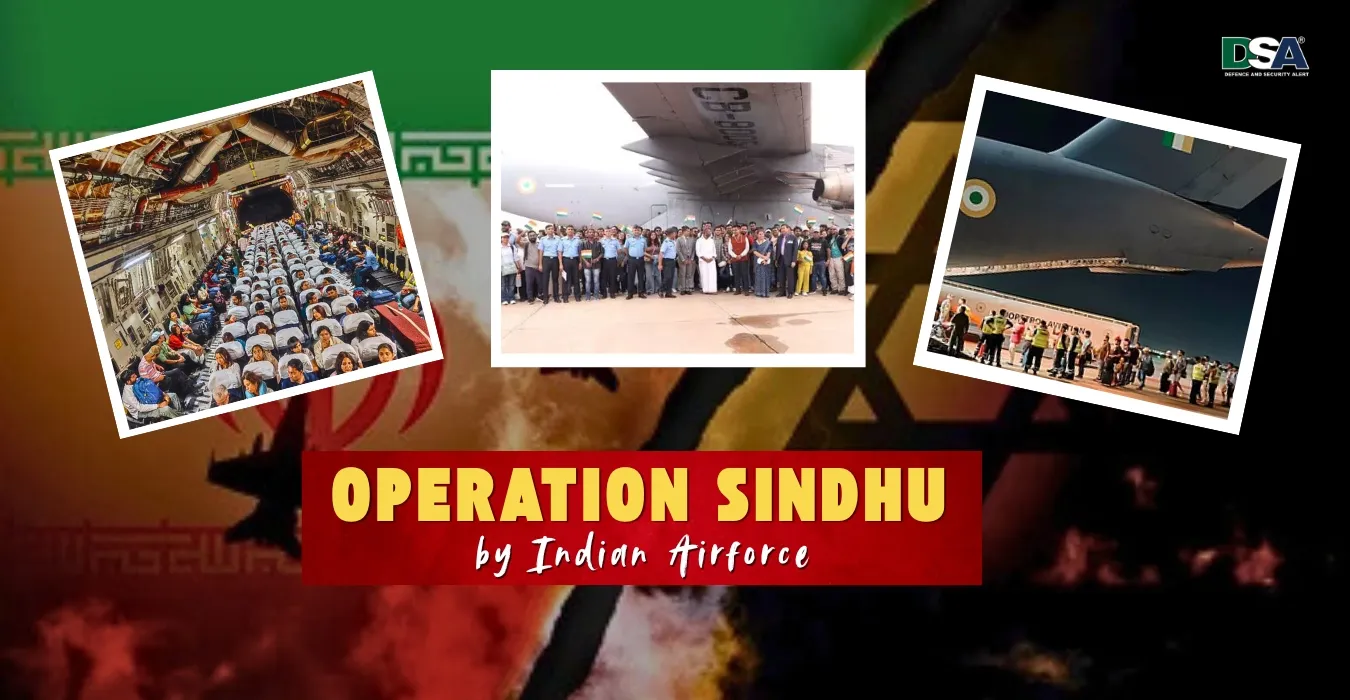
With the increase in tensions in West Asia following the targeted military attack Israel staged on Iranian nuclear and strategic infrastructure, the situation turned worse, particularly for foreign nationals studying and working in Iran. The growing tension between the two countries also threatened a lot of Indian citizens in the region. New Delhi initiated Operation Sindhu to airlift and rescue these citizens. It was not just the evacuation of Indian citizens, but India also helped evacuate the Sri Lankan as well as Nepalese people after their governments sent official requests to India. Such evacuations are a case of India using the idea of humanitarian missions as a means of implementing strategic diplomacy towards fulfilling its goals as a part of its Neighbourhood First policy. The swift rescue flights and arranged convoys, in this case, manifest the goodwill and the leadership of India in the region. It also demonstrates the process by which India defends its national interests, as well as being the first responder in the rest of South Asia.
Operation Sindhu: Strategic Execution and Regional Inclusion
The Indian foreign ministry and regional embassies were operating very closely to implement Operation Sindhu. A press release by the Ministry of External Affairs stated that 110 Indian students were evacuated from northern Iran to Armenia by the Indian Embassy in Tehran on June 17, 2020. They were then flown to New Delhi on a different flight. This was the initial step of the operation. Randhir Jaiswal, MEA spokesperson, reported that other evacuation flights, based in Ashgabat, Mashhad and Yerevan, had touched down in New Delhi on June 21 and 22. The flights returned more persons, and the number of evacuees reached a figure of 1428. The evacuation encompassed flight, ground travel and organized movements across other countries. This demonstrates the complexity and elaborate nature of ensuring that South Asians can reach their homes safely.
India’s Regional Evacuation Legacy: A Pattern of Responsibility
India’s present efforts to evacuate people are based on a long history of humanitarian operations. The government has already completed over thirty such operations rescuing people from Asia, Africa and Europe by air or sea. For instance, Operation Sukoon in Lebanon rescued 2,280 civilians during the war in 2006. The total number of evacuees included 69 Nepalese, 436 Sri Lankans, and seven Lebanese nationals, and the remaining number belonged to India. In the 2015 Yemen conflict, Operation Raahat evacuated 6,710 people. The number of Indians was 4,748, and 1,962 people were from other countries. The same year, India started the operation Maitri following a disastrous earthquake in Nepal. The operation rescued thousands of stranded Indian and foreign tourists. By engaging in such missions with the assistance of the host governments, India is now perceived as a responsible first responder that can at any time protect its citizens as well as its neighbouring states in South Asia during times of crisis.
Neighbourhood First and Strategic Soft Power
India believes that evacuation missions are an integral aspect of its “Neighbourhood First” policy. According to the authorities, assisting the individuals of Nepal and Sri Lanka during Operation Sindhu demonstrated that India was serious about regional cooperation. Arzu Rana Deuba, Nepal’s foreign minister, praised EAM S. Jaishankar for India’s “swift assistance,” while Sri Lanka’s foreign ministry also expressed its sincere gratitude. India’s crisis-driven aid is a powerful tool of soft power since it directly helps people who are suffering. This is different from China’s concentration on investing in infrastructure projects in other countries. India’s aid is closely related to its Neighbourhood First policy. By integrating the skills of evacuation, such as airlifts and logistics, with the process and practice of diplomacy and mass support, India manages to turn evacuation operations into a form of hard diplomacy that serves its ambitions of leadership in the Global South.
Conclusion
Operation Sindhu indicates that evacuation can be good not only to assist people but also to foreign policy. India’s swift and well-planned actions to keep its own people and those from nearby countries safe have substantially strengthened its diplomatic standing. India’s foreign policy now includes such initiatives as a key part. They have a strong message that New Delhi is committed to defending its people and supporting its neighbours. This enhances India’s capacity as a regional leader by allowing it to perform rather than just talk.
