
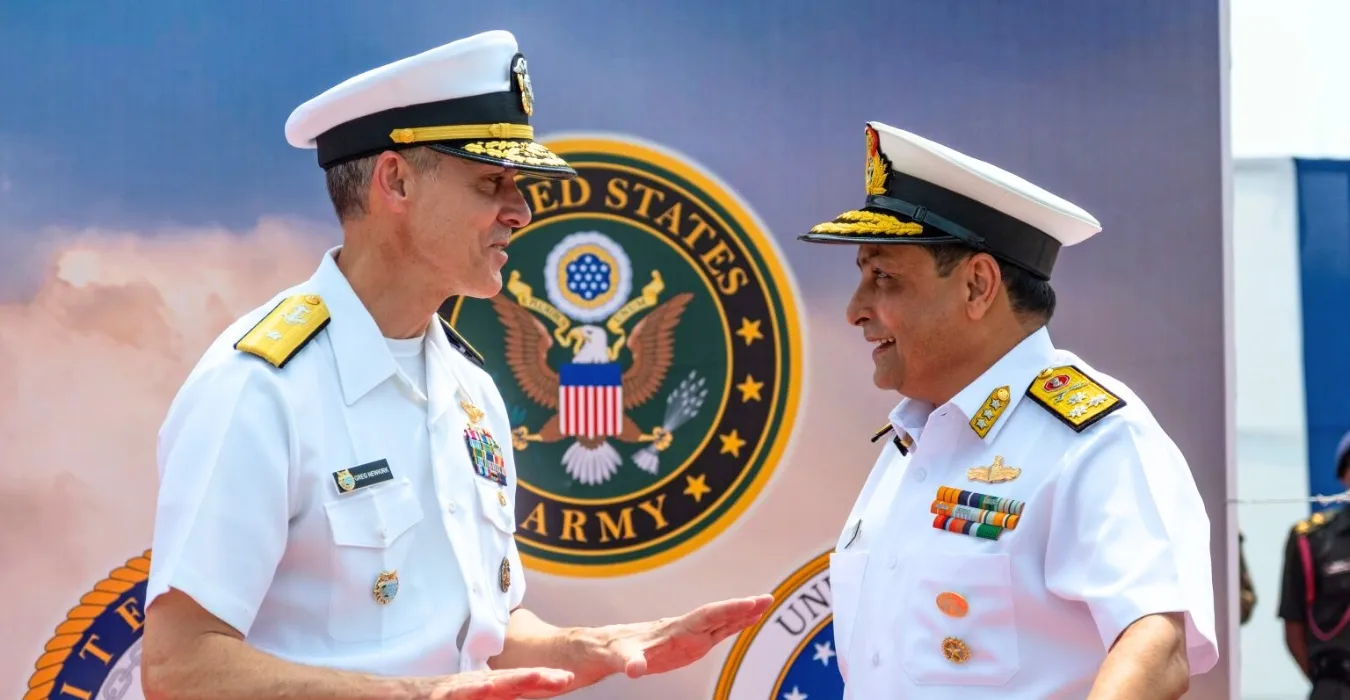
Exercise Tiger Triumph 2025, the fourth edition of the bilateral tri-service HADR amphibious drill between India and the United States, showcased how two global democracies are building bridges of cooperation, not just through combat readiness, but by preparing to save lives together in times of crisis. Held from April 1 to 11, 2025, in Visakhapatnam and Kakinada, Andhra Pradesh, this landmark exercise culminated with a grand Distinguished Visitors’ (DV) Day on April 11, highlighting seamless interoperability across land, air and sea domains. It served not only as a strategic drill but also a testament to the evolving synergy underpinned by logistics sharing, technological integration, and mutual trust.
Harbour Phase: Setting the Stage at Visakhapatnam
The first leg of Tiger Triumph 2025, the harbour phase (April 1–7), kicked off at Visakhapatnam—home to the Eastern Naval Command. This phase emphasized theoretical coordination and operational planning, setting a firm foundation for the complex field drills that followed.
Key highlights included:
- Opening Ceremony: Dignitaries such as Mr.Jorgan K. Andrews, Chargé d’Affaires, US Embassy, and Vice Admiral Sameer Saxena, Chief of Staff, Eastern Naval Command, underscored the exercise’s strategic importance.
- Subject Matter Expert Exchanges (SMEEs): These sessions focused on cutting-edge domains like drone warfare, medical evacuation, and space-based disaster response systems-ushering in a new layer of defence dialogue.
- Cross-Deck Visits and Sports Events: These seemingly informal events played a vital role in building interpersonal rapport and cultural understanding among personnel, enhancing operational chemistry during field activities.
This phase provided the blueprint for real-time operational deployment and allowed both nations to calibrate communication, strategy and deployment practices effectively.
Sea Phase: Where Strategy Meets Execution
From April 8 onwards, the focus shifted to the sea phase—the heart of the exercise. The operations took place off the coast of Kakinada and included amphibious landing drills, joint air operations and Special Forces insertions. The climax came on DV Day, April 11, which served as a live demonstration of months of planning and trust-building.
Key Operations Observed:
- Standoff and Hard Beaching: Amphibious assets executed precision landings along the coastline, simulating a large-scale disaster response involving evacuation and relief delivery.
- Slithering Ops from SC and Mi-17 V5 Helicopters: Special Operations Forces executed rapid insertion techniques, a critical skill in contested or devastated zones.
- C-130 and Integrated Air Ops: Involving the Indian Air Force, US Marine Corps, and other air assets, these manoeuvres displayed high-altitude logistics and casualty evacuation capabilities.
The operations were observed by top brass including the Flag Officer Commanding Tamil Nadu & Puducherry Naval Area (FOTNA), US Consul General and Commander of the US Navy’s Strike Group Five. Their presence symbolized the high-level political and strategic attention Tiger Triumph commands.
Beyond the Drill: Strategic Implications
Tiger Triumph 2025 is not merely a military exercise. It is a living embodiment of the Logistics Exchange Memorandum of Agreement (LEMOA), signed between India and the US, which allows for mutual use of facilities for refuelling, repair and supplies. It also serves as a real-time testbed for integrated technologies such as:
- Drones and AI in HADR scenarios
- Joint communication platforms
- Advanced casualty management systems
Moreover, in the wake of increasing climate-induced disasters across the Indo-Pacific—ranging from cyclones to tsunamis—such exercises are a cornerstone for developing a regional HADR coalition. With China’s expanding influence in the South China Sea and Indian Ocean Region, the strategic calculus behind these drills is clear: to affirm a rules-based international order and free, open maritime commons.
Interoperability in Action: The Real Success
Perhaps the most valuable takeaway from Tiger Triumph 2025 was the display of interoperability-not just in weapon systems or platforms, but in thinking, response strategy and values.
- Both forces demonstrated jointmanship, executing complex missions with seamless command coordination.
- Tactical integration extended across air and maritime domains, with cross-briefing and hybrid formations that mirrored real-world disaster response teams.
- Joint usage of assets like helicopters, landing crafts and UAVs showed that India and the US are no longer just strategic partners-they are becoming tactical allies on the ground.
This level of integration reflects growing trust, something hard-earned through persistent engagement and shared exercises over the years. From the first edition in 2019 to today, Tiger Triumph has evolved from symbolic collaboration to a robust operational partnership.
Conclusion: Charting the Future of Joint HADR Preparedness
Tiger Triumph 2025 is more than a bilateral military drill—it is a forward-looking initiative that reflects the shared democratic values, operational vision, and humanitarian commitment of India and the United States. In an increasingly unpredictable world, where disasters ignore borders and crises escalate rapidly, the ability of allied forces to respond together can mean the difference between chaos and coordinated relief. With every edition of Tiger Triumph, the two nations are not just rehearsing for emergencies; they are engineering a safer, faster and more inclusive model of global disaster response. As India and the United States continue to strengthen their comprehensive global strategic partnership, Tiger Triumph stands as a beacon of cooperation—symbolising how democracies can lead with compassion, capability and commitment.
